Why a CVD Heating Jacket Matters for Deposition Stability
In chemical vapor deposition, stable temperature conditions are part of the process window, not a finishing detail. A CVD heating jacket can be relevant wherever a delivery line, valve body, source vessel, or other external component must be kept at a planned temperature while gaseous precursors move toward the reaction zone. Its role is not to replace chamber heating or prove film quality by itself. Instead, it helps engineers manage one source of thermal variation that may otherwise complicate process troubleshooting.
From an equipment-integration perspective, the useful question is not simply whether to add a CVD heating jacket. It is which part of the system needs thermal support, what temperature range is required, how heat loss occurs, and how that decision fits with precursor chemistry, line geometry, insulation, sensors, controls, maintenance, and safety review. Those conditions determine whether a heating jacket is a sensible part of a deposition-stability plan.
Temperature stability begins before the reaction surface
CVD generally transports volatile precursors in vapor form to a reaction chamber, where they decompose or react at a surface. That simple description explains why temperatures outside the chamber can matter. If a precursor, process-gas stream, or delivery component sees an unintended cold region, its physical behavior may differ from the intended process condition. The result can be more difficult flow control, unwanted surface interaction in hardware, or a process response that is harder to interpret.
A CVD heating jacket provides distributed external heat around an eligible component. When correctly specified, it can reduce temperature loss to the surrounding environment and make the local thermal condition easier to control. It does not create a universal temperature setting. The appropriate setpoint must come from the chemistry, pressure regime, component materials, and validated process limits.
How thermal variation can affect deposition stability
Deposition stability is usually discussed through repeatability: whether runs behave consistently enough for engineers to understand and control the variables that influence film formation. Temperature is one of those variables. It can affect precursor transport, reaction kinetics, adsorption behavior, and the balance between conditions in different parts of a tool.
For example, a line section that loses more heat than expected may not track the temperature assumed in a recipe or maintenance procedure. That does not automatically mean a film defect will occur, because gas flow, pressure, substrate condition, reactor design, and chemistry also matter. It does mean the team has another thermal condition to verify when investigating run-to-run variation.
A published heat-flow modeling study of tungsten CVD linked film-thickness uniformity in its studied configuration more strongly to wafer temperature gradient than to gas-flow geometry. The point is not that every CVD process follows the same relationship. It is that temperature gradients deserve explicit attention. A CVD heating jacket may help manage gradients outside the reaction zone, while wafer and chamber temperature control require their own measurements and controls.
Where a CVD heating jacket can fit in a process system
The most relevant locations are typically external components with a defined thermal requirement rather than every piece of piping in a tool. Depending on the process design, engineers may evaluate a CVD heating jacket for a precursor delivery line, a valve or regulator body, a source container, a manifold, or an connection that experiences meaningful heat loss. The decision should start with measured or modeled conditions, not with a generic catalog label.
Delivery lines and fittings
Long runs, exposed bends, metal fittings, and interfaces near cooler equipment can form local heat-loss paths. A heating jacket can be considered where insulation alone does not keep the component within its documented operating condition. Flexible construction, access to fittings, sensor placement, and service clearances all matter. A jacket that blocks inspection points or creates tight bending stress can add practical problems even if it provides heat.
Source-side hardware
Some precursor-handling arrangements need a stable source-side condition to support controlled delivery. Here, a CVD heating jacket should be assessed with the vessel design, heating method, control loop, and material compatibility. The jacket should not be treated as an isolated accessory; its control behavior needs to be coordinated with the wider delivery system.
Connections between subsystems
Thermal discontinuities often appear where one subsystem hands off to another. A heated line may connect to an unheated block, or insulation may change near a serviceable joint. Reviewing these transitions helps identify whether a CVD heating jacket needs to cover a component, a section of line, or neither. It also keeps the discussion focused on the thermal path rather than a single nominal setpoint.
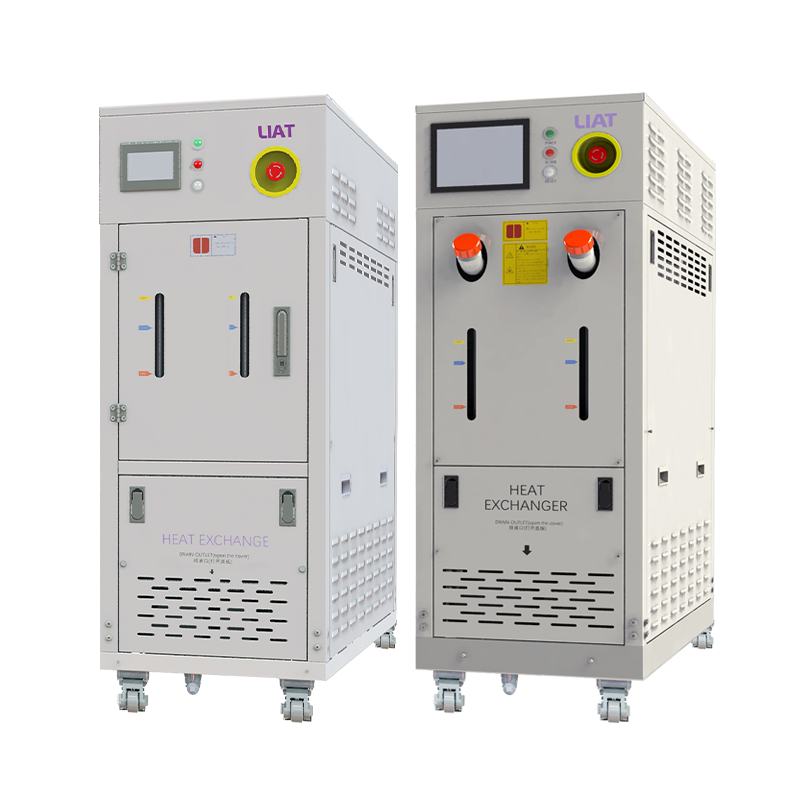
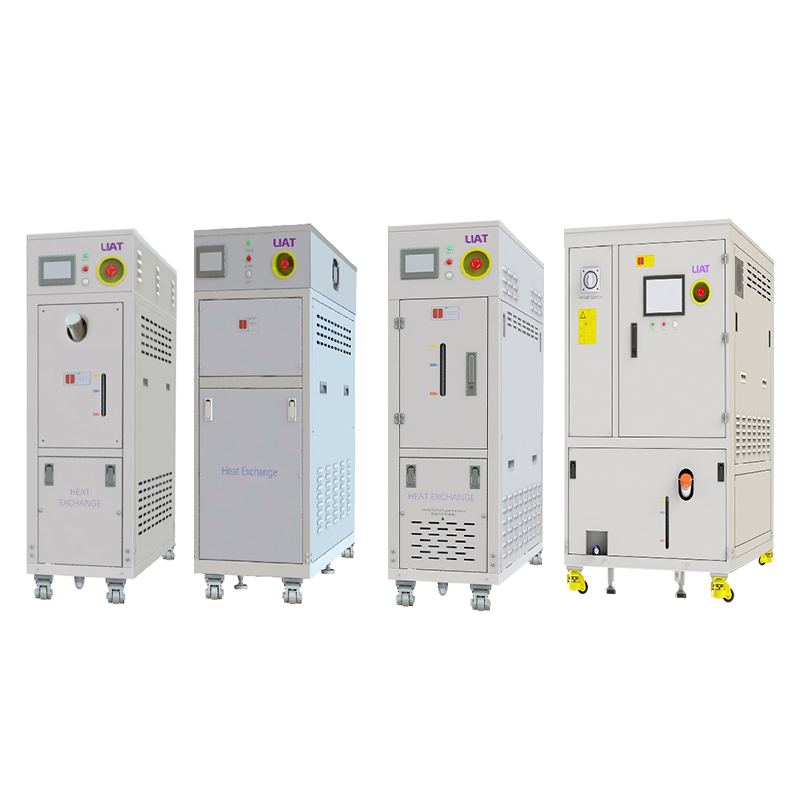
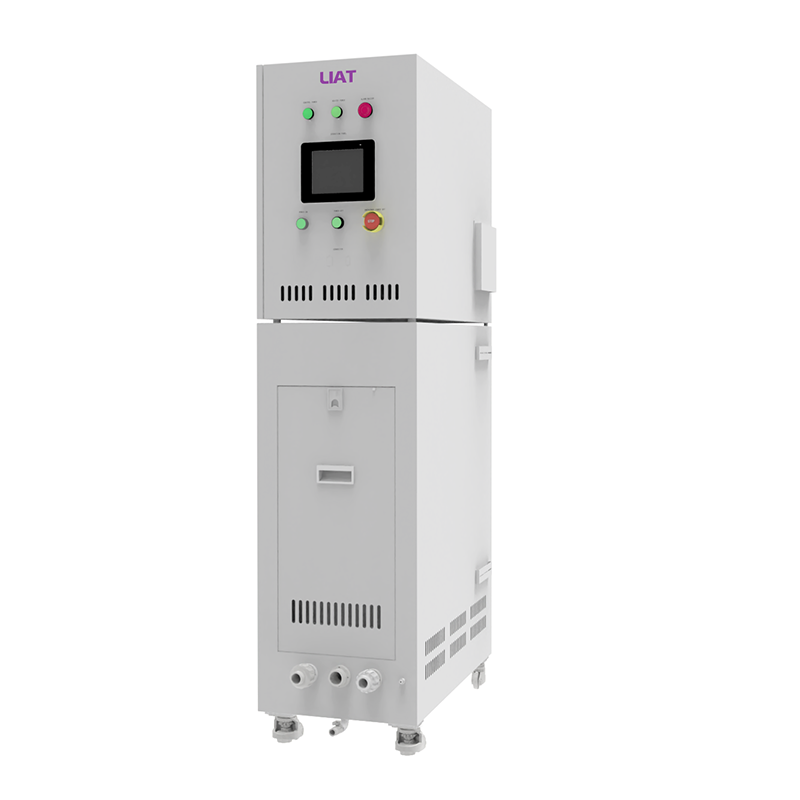
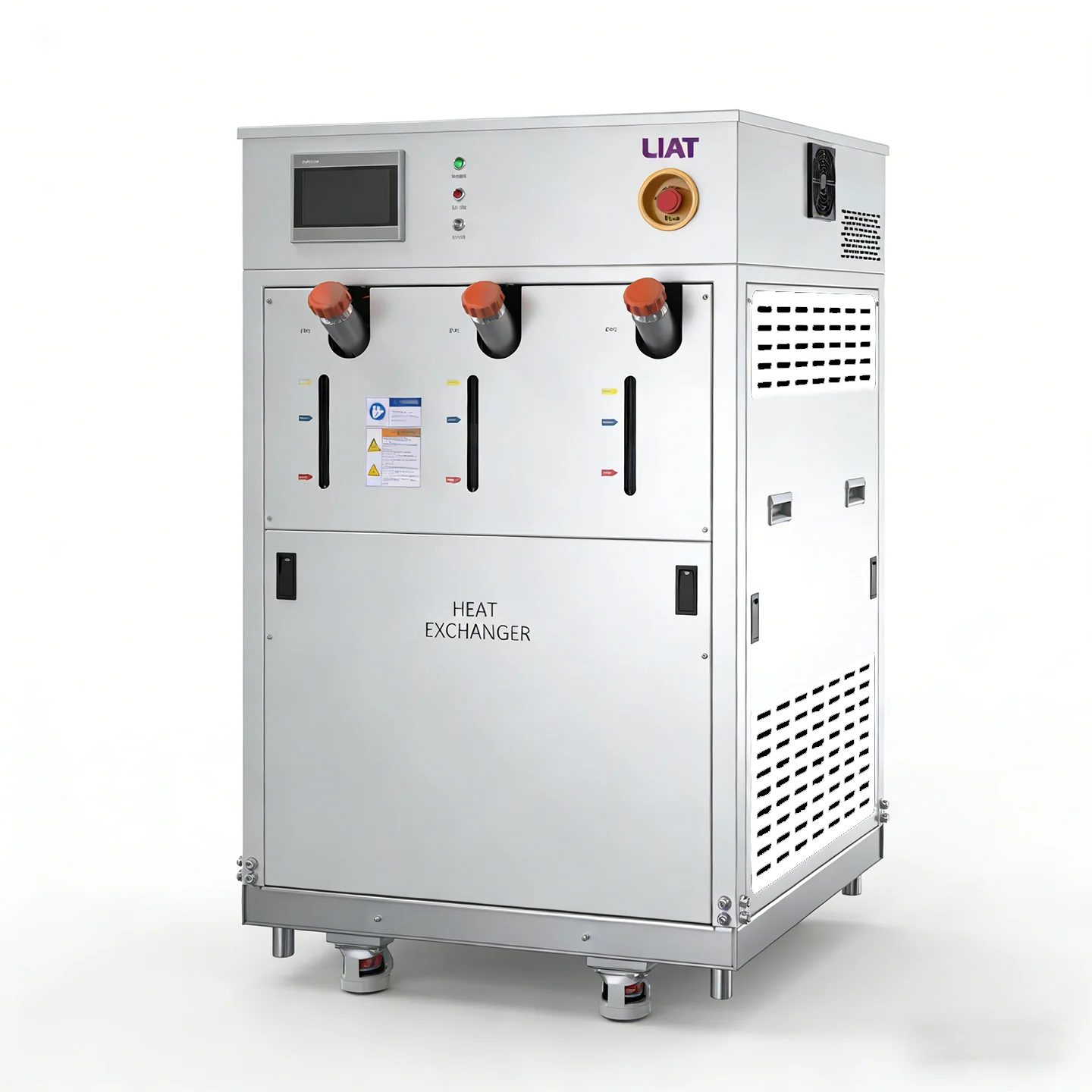 Illustrative view of externally heated delivery hardware in a CVD thermal-management discussion.
What to verify before specifying a heating jacket
For a CVD heating jacket, start by collecting the project conditions that affect both performance and safe integration. A practical review can include:
- Process temperature range: Define the operating range, allowable deviation, warm-up expectations, and the temperature measurement location.
- Precursor and gas-delivery conditions: Confirm the chemical information, pressure regime, phase behavior, and any documented compatibility requirements.
- Component geometry: Record outside diameter, length, bends, valves, flanges, supports, and areas that must remain accessible.
- Heat-loss environment: Consider ambient variation, airflow, nearby cooled equipment, enclosure conditions, and insulation already present.
- Controls and sensing: Clarify sensor type and placement, controller logic, alarms, interlocks, power routing, and the response to a sensor or power fault.
- Materials and installation: Review jacket materials, fastening method, electrical protection, cleanroom requirements where applicable, and maintenance access.
This checklist turns a broad request for a heating jacket into a defined engineering discussion. It also helps separate confirmed requirements from assumptions that still need test data or supplier documentation.
Design details that influence real-world consistency
Uniform contact and coverage are important, but they are not the entire story. A CVD heating jacket must be matched to the component shape and the way the assembly is installed. Gaps, poorly supported bends, sensor locations that do not represent the critical surface, and inconsistent insulation can all affect the observed temperature pattern. For complex layouts, it is often more useful to map zones and verify them during commissioning than to assume one controller output represents every point.
Control strategy matters as well. A stable controller response depends on thermal mass, heat transfer, sensor feedback, and the disturbance created by ambient conditions or process changes. A rapid response is not automatically better if it causes overshoot in a sensitive application. The engineering goal is a controlled, repeatable thermal condition within the validated process limits.
For semiconductor-related thermal-management discussions, Lingheng Thermal Control Technology (Suzhou) Co., Ltd. frames system conversations around temperature range, heat load, medium, and interfaces rather than treating one parameter as a complete answer. That is a useful approach for a CVD heating jacket evaluation too: the jacket, its controller, the delivery hardware, and the process recipe should be reviewed as coordinated elements.
A practical verification path
- Define the problem: Identify the component, the suspected thermal variation, and the production or development condition in which it appears.
- Establish a baseline: Gather current temperature readings, sensor locations, insulation details, and relevant run records. Do not infer surface temperature from a remote controller display alone.
- Set acceptance criteria: Document the required operating window and how the team will confirm it under representative conditions.
- Review the CVD heating jacket design: Check fit, zones, sensors, materials, electrical connection, access points, and thermal transitions at the jacket boundaries.
- Commission in stages: Verify heat-up behavior, steady-state control, alarms, and readings at meaningful locations before relying on the configuration for routine runs.
- Link results to process observations: Compare the thermal evidence with deposition data while keeping other process changes visible. This supports diagnosis without claiming that one component caused every outcome.
Common mistakes to avoid
One common mistake is treating a CVD heating jacket as a substitute for understanding the entire thermal system. Another is specifying only a nominal temperature without documenting sensor placement, heat-loss conditions, or the relevant process limits. Teams can also overlook maintenance: a jacket that is difficult to remove for cleaning or inspection may create operational friction later.
It is equally important to avoid unsupported claims about deposition results. A heating jacket can support a controlled condition, but film thickness, composition, stress, and uniformity remain process outcomes that need validation in the specific tool and chemistry. When a project requires documented evidence, the next step is to review applicable specifications, test plans, and authorized process data.
Conclusion
A CVD heating jacket matters because deposition stability depends on controlling the conditions that influence precursor delivery and process behavior. By limiting avoidable heat loss around selected external components, a properly engineered CVD heating jacket can make the thermal state of those components more predictable. The strongest implementation begins with the process window, validates the full thermal path, and regards the jacket as one coordinated part of a larger CVD system.
 Hot News