
 EN
EN
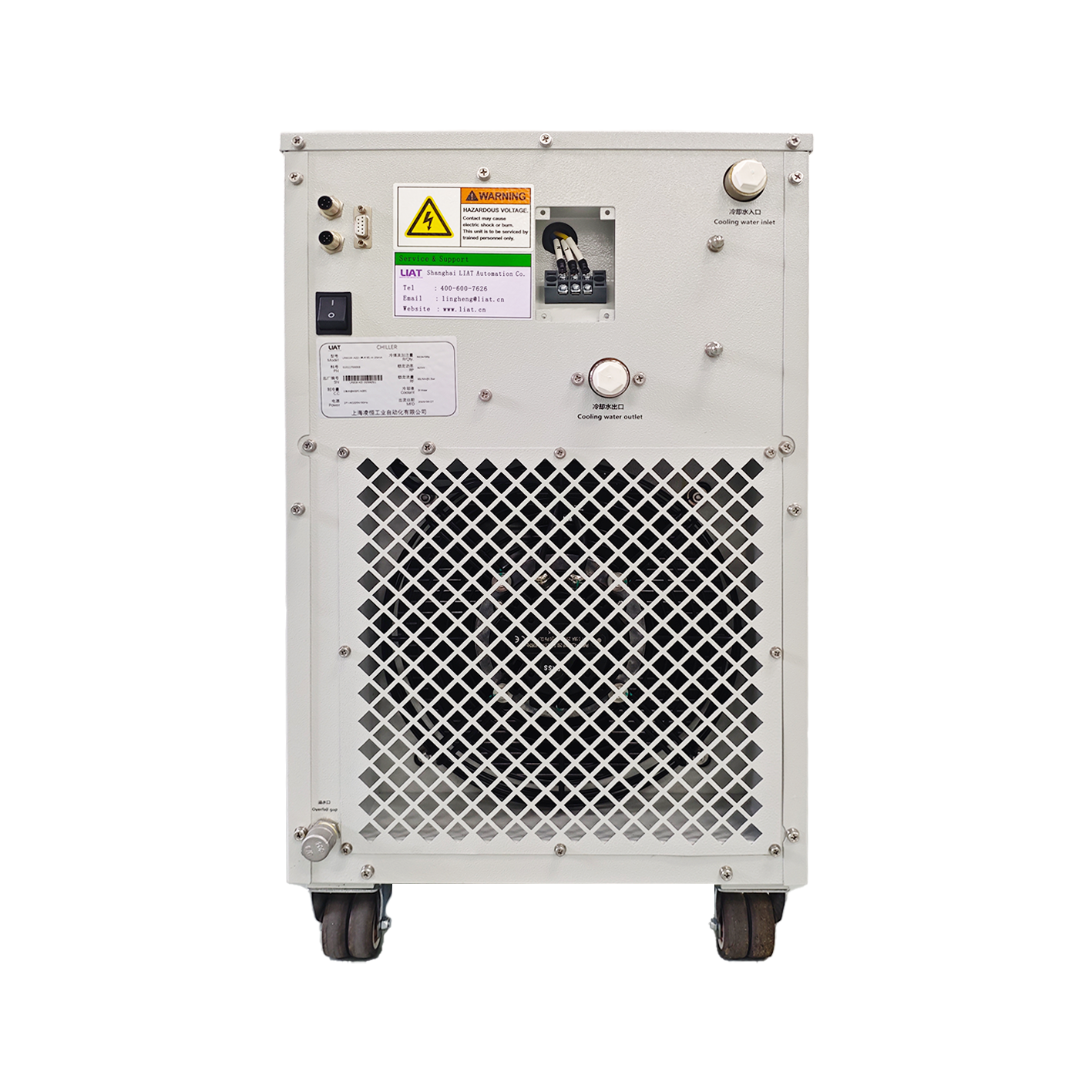
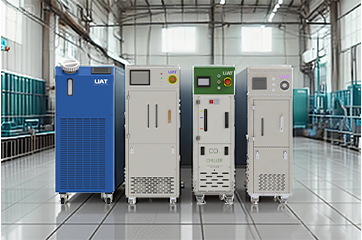
Controlling temperature is essential for improving output, guaranteeing consistent productivity, and sustaining fabrication plants profitable in the competitive market.
Key Engineering Concepts of the Semiconductor Process Chiller
Closed Circuit Temperature Management with Real Time Load Adjustment
Process chillers in the semiconductor industry maintain a temperature stability of around ±0.1°C by utilizing a closed loop thermal management system that adjusts the coolant flow in real time using pressure and temperature sensors. They use advanced proportional-integral-derivative (PID) controllers that respond to thermal load changes dynamically. For example, during etching processes, some controllers will adjust compressor speeds and pump flow rates to prevent temperature variance that can damage the wafers being processed. In a 2023 article by Semiconductor Engineering, research showed that if thermal variation is allowed to go unchecked, the defect rates increase by 18%. In the near future, predictive algorithms will be critical for anticipating load changes in high temperature processes with controlled steady state to ensure consistent performance.
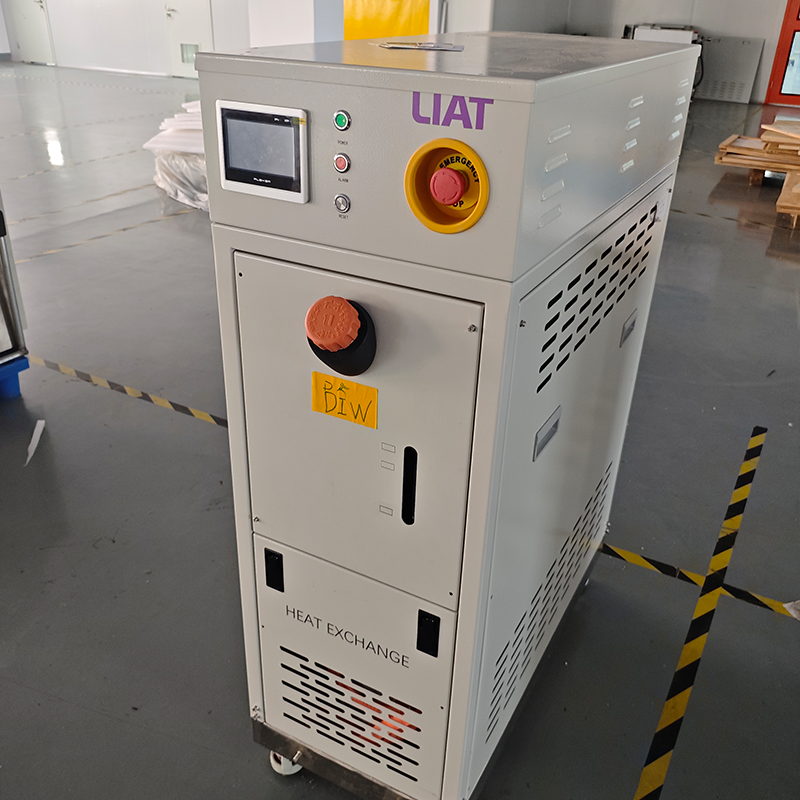
Magnetic Bearing Compressors and Cascade Refrigeration
Achieving exceptional precision and control in temperature ranges less than 0.1°C can only be accomplished through advanced refrigeration engineering using two-step cascade refrigeration. The precision control down to 0.1°C and even < 0.1°C accuracy can be achieved by developing first stage refrigerant loops that cascade from first cooling or refrigerating down to second loops. Additionally, oil-free magnetic bearing compressors are utilized in cascade refrigeration systems. The absence of oil in the system means less friction, wear and tear, and system contamination. Moreover, magnetic bearing-based compressors can make tiny adjustments in operational speed by as much as 0.1 % increments. The consequence of this operational stability translates to magnitudes of operational stability. This means that the refrigerating system can remain operational within 10 % of the total system capacity and still be able to stay and maintain a temperature stability of ± 0.05 °C. This type of operational stability and precision is required in EUV lithography temperature control and stability, in which thermal variations of even the smallest fraction can compromise and destroy the lithography patterns. Moreover, magnetic bearing systems are more energy efficient by more than 35 % than previous technology compressors (ASHRAE, 2023)
Smart Integration: How the Semiconductor Process Chiller Integrates with Core Equipment
Connecting with EUV Lithography, CMP, and ALD Systems
The process chillers of semiconductor manufacturers maintain a consistent temperature of ±0.05°C critical when directly linked with process tool control systems during extreme ultraviolet lithography to prevent alignment errors caused by thermal drift of optical components. For chemical mechanical polishing, these chillers are always adjusting their cooling capacity to respond to synergistic and frictional heat loads that may exceed 10 kW per square meter. For atomic layer deposition, the chillers adjust to temperature control of precursor reaction conditions. Last year, Semiconductor Engineering reported that this type of collaboration resulted in an 18% reduction in wafer defects at the 3nm node. Process tool control systems communicate with the chillers in real time ensuring that all three systems operate in unison using the same communication protocols, SECS/GEM, and Modbus TCP.
Achieving Efficiency While Addressing the High-Flow, Low-Delta-T Problem
With an operational temperature differential (ΔT) of 2°F or lower, semiconductor manufacturing facilities have a need for coolant flow that is greater than 150 GPM. This combination of requirements is challenging for traditional systems. Semiconductor process chillers overcome this challenge by utilizing:
- Variable speed pumps that achieve and maintain laminar flow with coolant flow rates of up to 200 GPM.
- Microchannel heat exchangers that achieve and maintain a thermal transfer efficiency that is 2x greater than traditional heat exchangers.
- Predictive algorithms that identify and anticipate shifts in the thermal load due to swiftly changing processes.
This method provides an operational temperature differential of no greater than ±0.1°C and provides a 35% reduction in energy consumption compared to fixed speed systems. Semiconductor process chillers optimize the temperature differential/flow mass balance, allowing the system to effectively prevent the waste of overcooling during idle times, a critical feature for sustainable fab operation (ASME 2023).
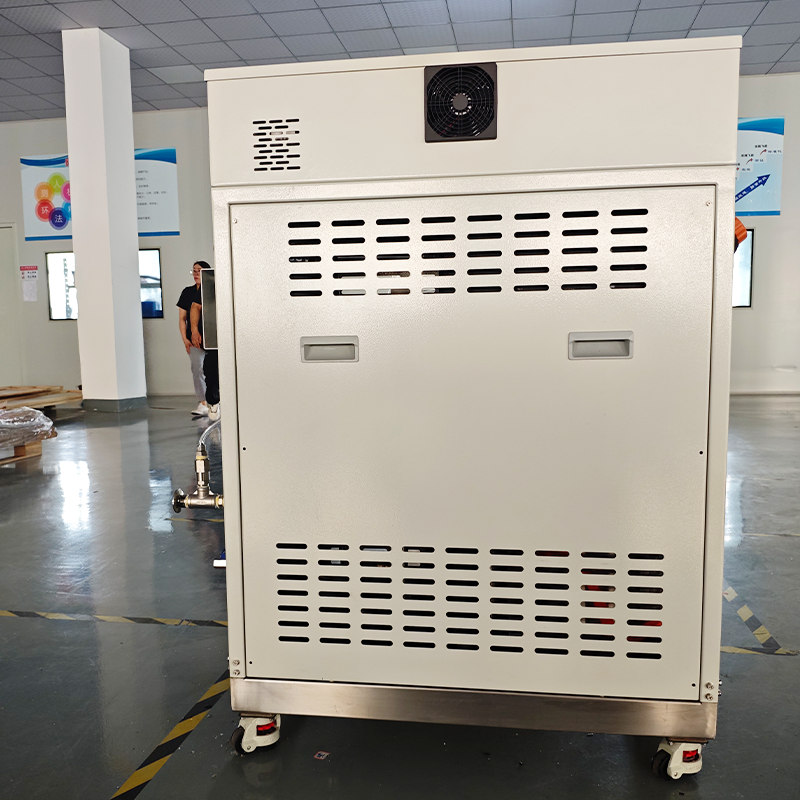
Maintaining Long-Term Precision: Calibration, Diagnostics, and Adaptive Control Preventive Monitoring of Microchannel Heat Exchanger Fouling and Flow Degradation.
Microchannel heat exchangers require continuous diagnostics. Even the accumulation of sub-5-micron particles, while seemingly insignificant, leads to a reduction in heat-transfer efficiency of 12–18% a year directly impacting the wafer yield. More advanced systems have three additional features: 1. Real-time flow sensors (foulant accumulation sensors) detect a flow reduction greater than 2% of the anticipated pressure drop. 2. Adaptive control systems that automatically adjust for the additional thermal resistance as a result of fouling. 3. Automated chemical injection cycle (foulant clearing) systems that are chemically active as a result of conductivity. These features help maintain operational control to within ± 0.05 °C control and extend service intervals by 40% in comparison to a projected maintenance schedule. Every three months, sensors are calibrated to demonstrate compliance with NIST traceable (cryo)standard and machine learning has been used to model and predict failures within a 72-hour window.
FAQ: Why is control of the temperature in semiconductor manufacturing such a significant factor?
The control of temperature is a significant factor in the manufacturing of semiconductors as the manufacturing process is at the nanoscale which leads to defects and with that comes loss of profitability.
In what way do semi-conductor chillers achieve such precise temperature control?
In order to achieve such precise control of temperature semi-conductor process chillers utilize a closed-loop, a cascade of refrigerators and magnetic bearing compressors.
Why are magnetic bearing compressors used in these systems?
Magnetic bearing compressors ease friction, stay clean, and allow precise adjustments to speed, which is critical for providing temperature stability to systems and to enhance energy efficiency.