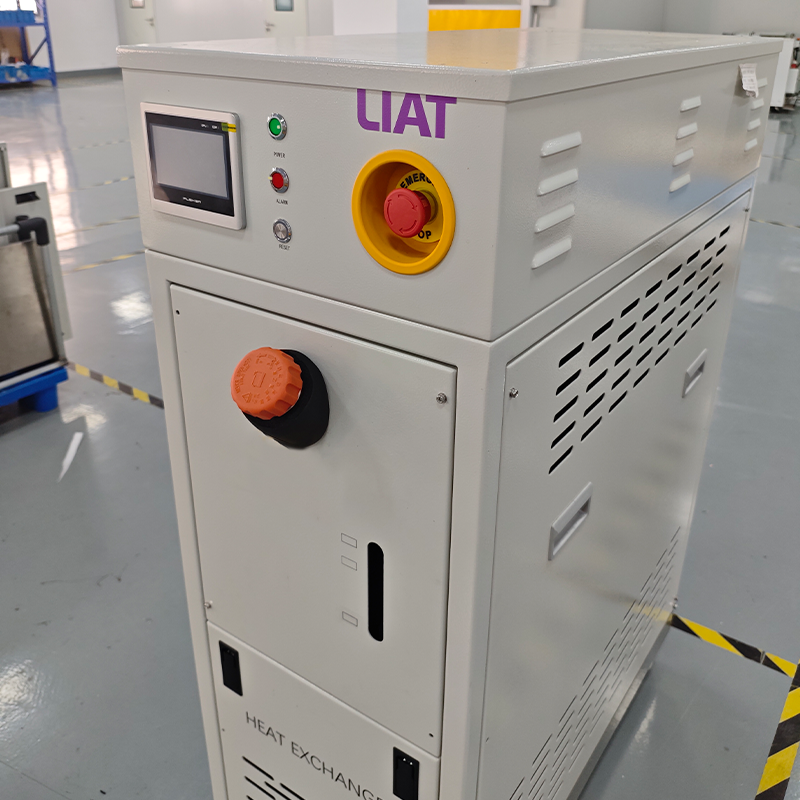
Why Thermal Stability Is Essential for Test Accuracy and Yield
How sub-degree thermal changes cause false fails and measurement drift
Within a single test cycle for a semiconductor wafer, sub 1-degree thermal changes will cause significant issues. These changes can cause probe cards to shift. When probe cards shift, the electrical contacts can misalign, causing true positive chips to be incorrectly thrown out. Simultaneously, the measuring tools will also drift due to thermal resistance changes and start measuring incorrectly (nose-drift). For example, a drift of 0.5 °C affects the silicon band gap to drift about 0.3%, which results in incorrectly measuring nearly all the parameter tests we have. Because of all these thermal inconsistencies, the test hits, and the product’s reliability are greatly reduced. Therefore, manufacturers have to put a lot of money into extremely precise thermal control systems which ensure a stable temperature to avoid serious and costly errors.electric lunch box food warmer, desktop meal heater, compact food warmer container
Empirical data has shown that when the stability of the temperature is maintained within ±0.1 °C, there is a 2.3% increase in the average yield in 300mm logic wafer testing.
Industry studies have indicated that there is a correlation between the stability of temperature in the room and the performance level of the wafer. Last year, the Semiconductor Testing Journal indicated that testing facilities of 300mm logic wafers recorded a 2.3% increase in yield when the temperature was stabilized within a ±0.1°C range. Why does this occur? Tighter temperature ranges mean that there is a reduction in the false-negative results that can occur. It has been estimated that the yield of just 1% more wafers can recover millions of dollars worth of product in large scale manufacturing operations. Companies use temperature controlled chillers for semiconductors in the manufacturing process because of this. These chillers can set and maintain the temperature within 1 °C and produce the most significant impact for Quality Control (QC) and the Profit and Loss (P&L) of the business.
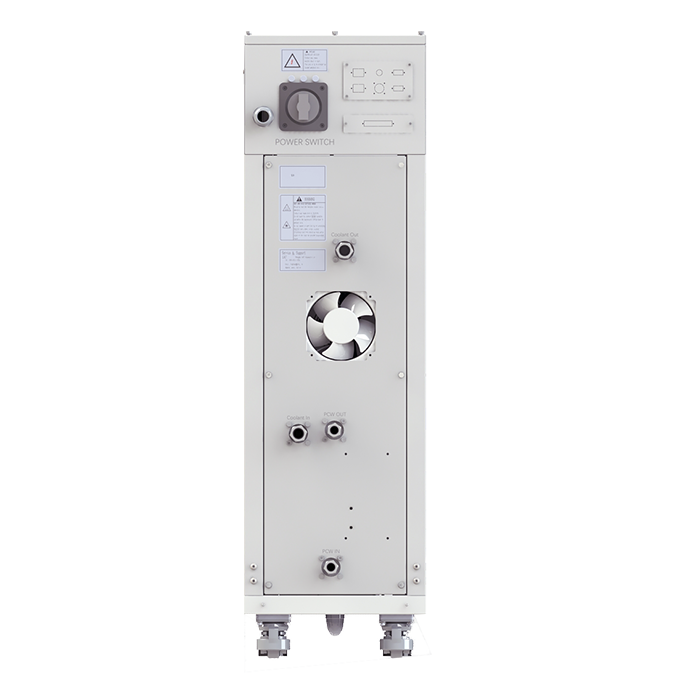
The Benefits of the First Semiconductor Temp Controlled Chiller Innovation
+/- 0.1°C Accuracy with Real-Time PID Tuning and Dual Sensor Feedback
During testing with semiconductors and similar technology, power fluctuations may provide false data. For this reason, solid-state tests require a critical focus on temperature stability. Most testing environments utilize a dual sensor feedback system. This system uses both a sensor from the inlet and a sensor from the outlet. In addition to this, testing environments utilize PID controllers to make real-time adjustments. This technology, coupled with proprietary testing methods, clears the thermal lag issue engineers spend hours addressing. The precision of a PID controller allows temperatures to remain stable even with rapid changes to the functionality of the test equipment. One-third of the test measurement error, measured as measurement drift, was a result of the precision of dual sensor feedback compared to older systems. In addition to increased test accuracy, sensor feedback and thermal lag systems increase the life and functionality of their test equipment by reducing the number of cycles their compressors go through. Most engineers know that the life of a test unit is drastically decreased by the temperature spikes that occur as a result of on-off cycling of compressors.electric lunch box food warmer, desktop meal heater, compact food warmer container
Improved outcomes and longer durability of tools is what this setup is entirely about.
To prevent testing stations from interfering with one another due to unwanted heat, we use multi channel thermal isolation.
When testing wafers in bulk volume, we use parallel testing. However, thermal cross interference between testing bays may cause inaccurate test results. Multi-channel thermal isolation is designed to avoid such interference by ensuring that each testing bay has its own pumps, heat-exchangers, and flow controllers. This way, thermal variations at each test station are maintained to one defined value and are prevented from varying thermal cross interference.electric lunch box food warmer, desktop meal heater, compact food warmer container
Isolation Strategy Temperature Variation Impact on Yield
Single Loop > 1.0°C 3 – 5% loss
Multi-channel <0.05°C 1.2% gain
A study focused on semiconductor thermal management conducted in 2023 showed that isolation channel thermal management during multi-site testing at testing facilities led to 19% fewer false failures. Furthermore, the design of the isolated thermal management channels prevents cross interference and simplifies maintenance by allowing the thermal management channel to be serviced individually without shutting down the entire production process.
Semiconductor temperature-controlled chillers must have good design level robustness to avoid single points of failure that could take down the system mid-test. The industry trend is to have dual pumps and dual compressors, so if something goes wrong with the main component, the backup kicks in and prevents those troublesome temperature swings. Also, predictive maintenance is becoming the norm in chillers. They can analyze vibration and flow of operational fluids and identify issues before they arise. Some fabs report a 30% decrease in unplanned downtime from this monitoring. Moreover, a steady operational state is critical to predictive maintenance in chillers. They have special control valves to hold temperatures to within one-tenth of a degree Celsius, and they can change PID control settings on the fly to provide rapid changes in load. The numerous protective measures built into chillers really do extend the life of equipment and minimize the negative impact false negatives have on production runs, as documented in industry reports on equipment health.
Semiconductor Temp-Controlled Chillers and the Impact of Reduced Thermal Stress on Hardware Lifetime
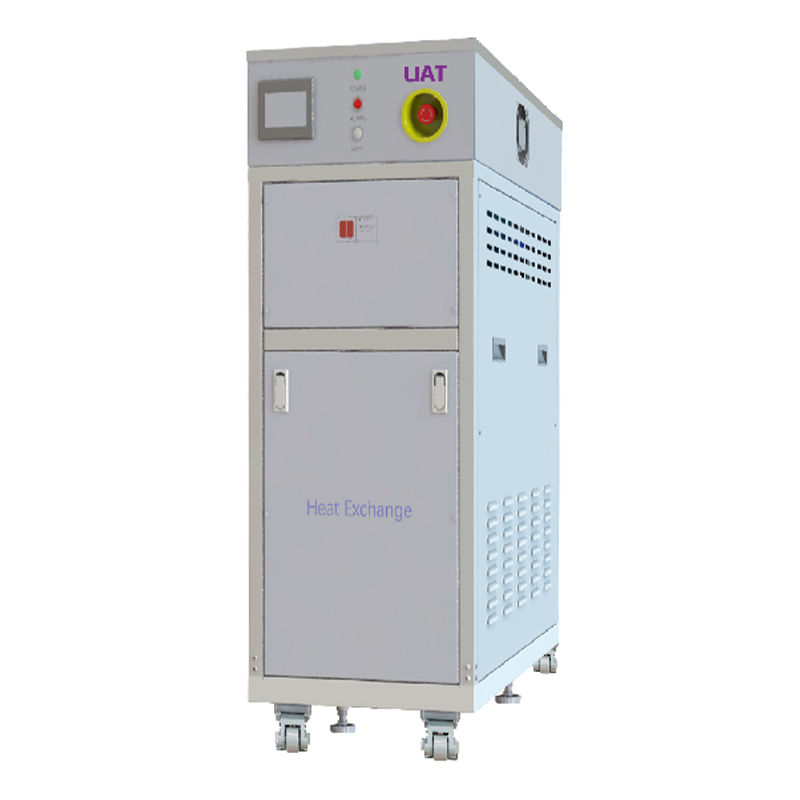
Degradation of probe cards is reduced by 37% medians
Wafer testing results in quick and extreme temperature changes that lead to thermal cyclic fatigue on the probe cards and quick mechanical breakdown of the probing assemblies. However, in conjunction with mechanical chillers specifically used for semiconductors, the problems associated with thermal cycling and mechanical breakdown of solder joints, fatigue, and cracks in the probes and wires are reduced. Component life is often published, and in your case, the average life of components increases by 100% when operating temperature is reduced by 10 degrees Celsius. In regards to probe cards, the operational life is far greater than the replacement cycle. Chillers that maintain thermal stability within a +/- 0.1 degrees Celcius range provide a return on investment due to the increased operational life of probe cards. Increases in the operational life of testing equipment as a result of reduced thermal cyclic fatigue are cited in field testing data from high volume logic testing sites. With the right equipment, the operational life of testing equipment can be increased by 37%. Furthermore, with reduced thermal cycling fatigue, less recalibration of the equipment is required, resulting in improved operational consistency of the equipment.
FAQ
What impact does thermal stability have in semiconductor assessments?
In terms of semiconductor assessments, thermal stability is essential in semiconductor assessments because it allows for correct positioning of the electrical contacts, obtaining stable measuring values, and avoiding discarding good chips as defective.
What is the impact of temperature precision on wafer yields?
Improved precision in temperature control, especially within the range of ±0.1°C, is one of the most important factors for the improvement of yields, as it relieves the concerns of measurement drift and false negativity. The yield improvement on the 300mm logic wafers has been reported to be as high as 2.3%.
What is the purpose of having redundancy in temperature controlled chillers?
In chillers, redundancy allows for the operation to continue uninterrupted through the use of backup systems such as dual pumps and dual compressors. This reduces the likelihood of sudden temperature changes caused by system failures.