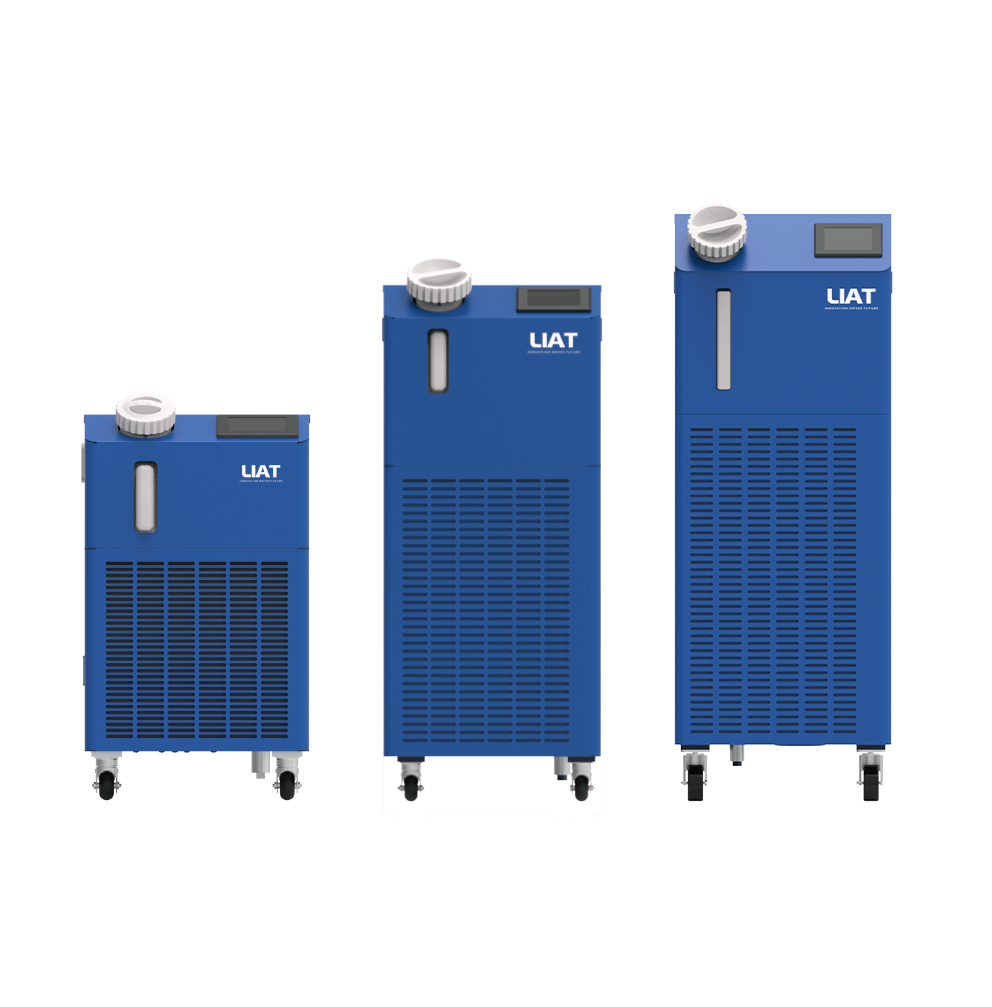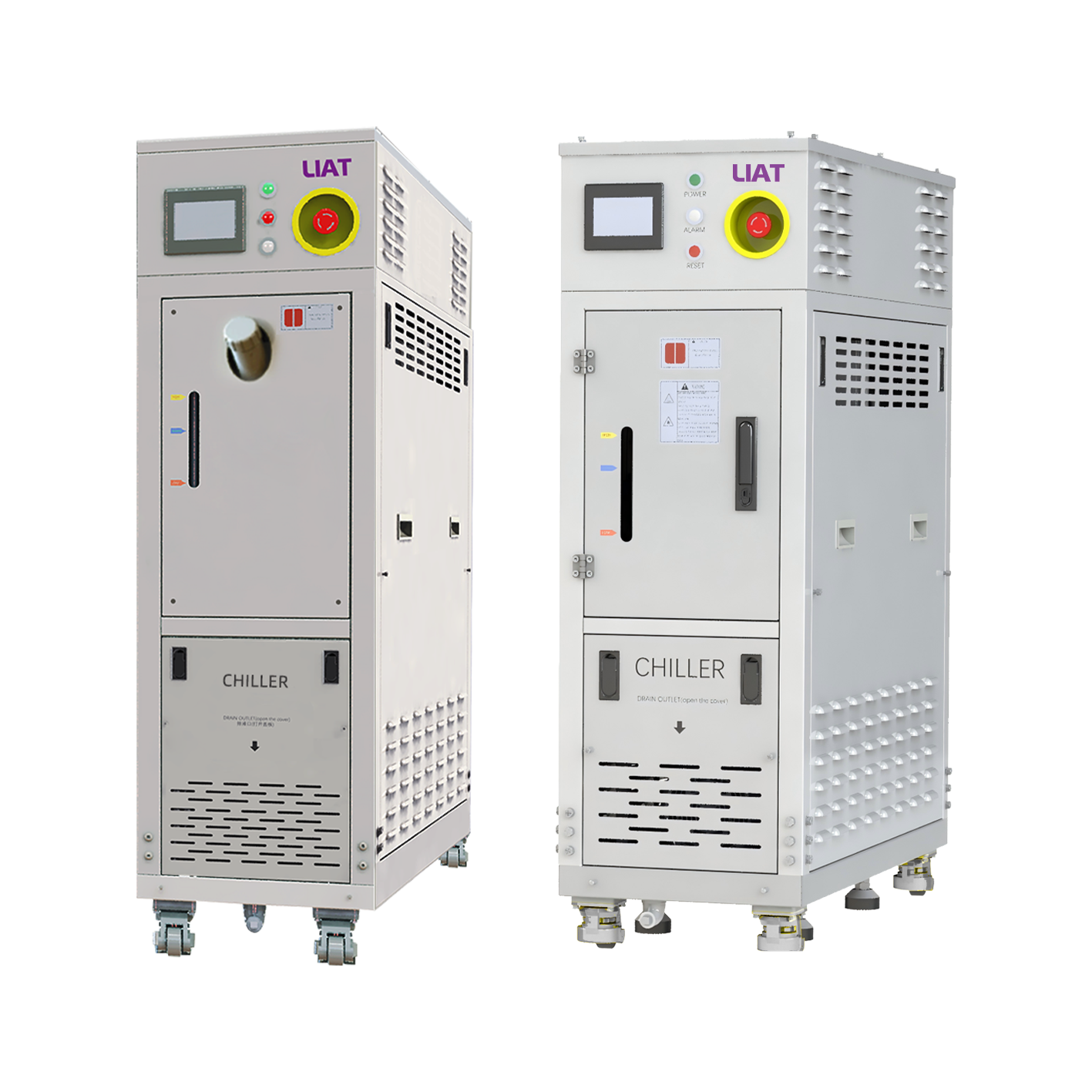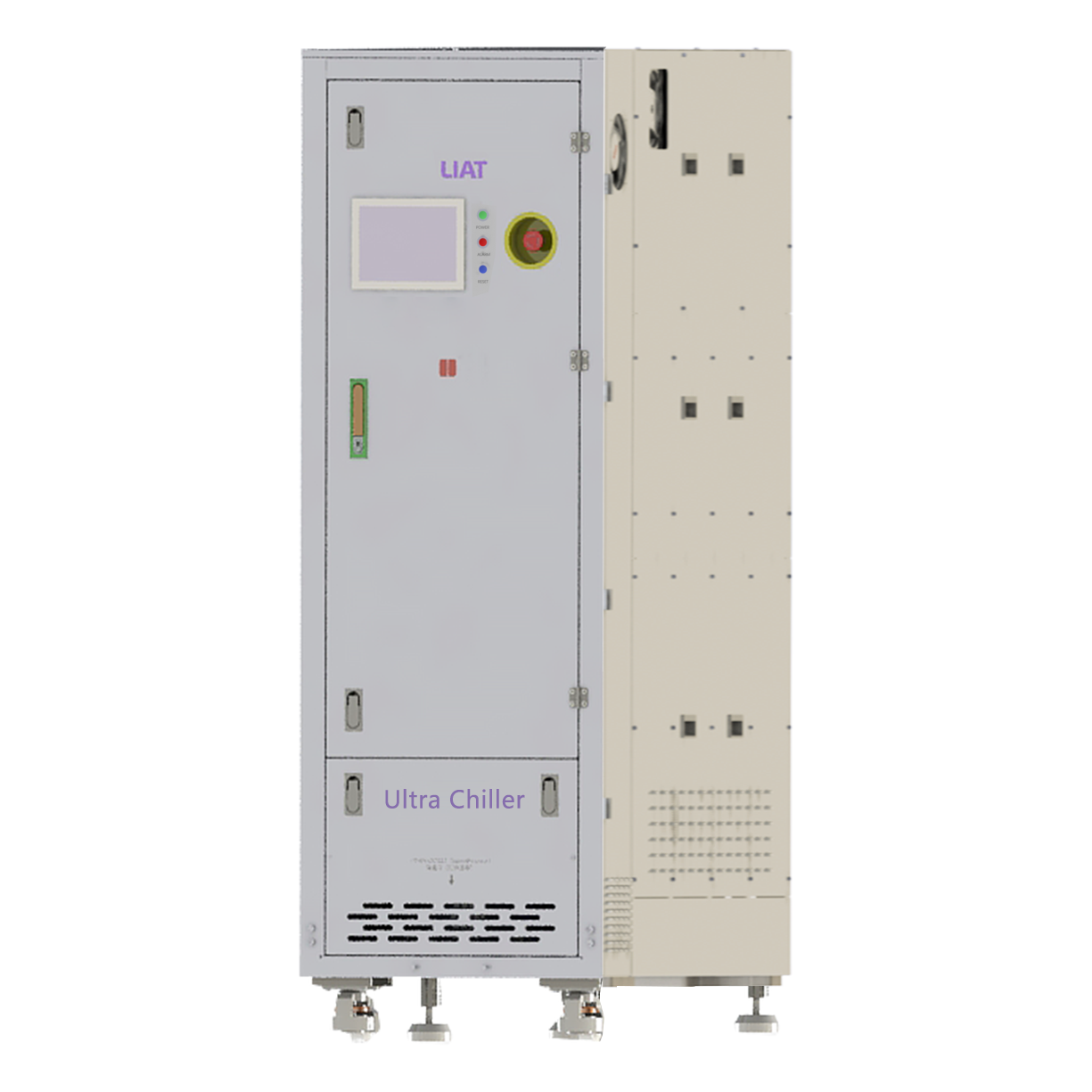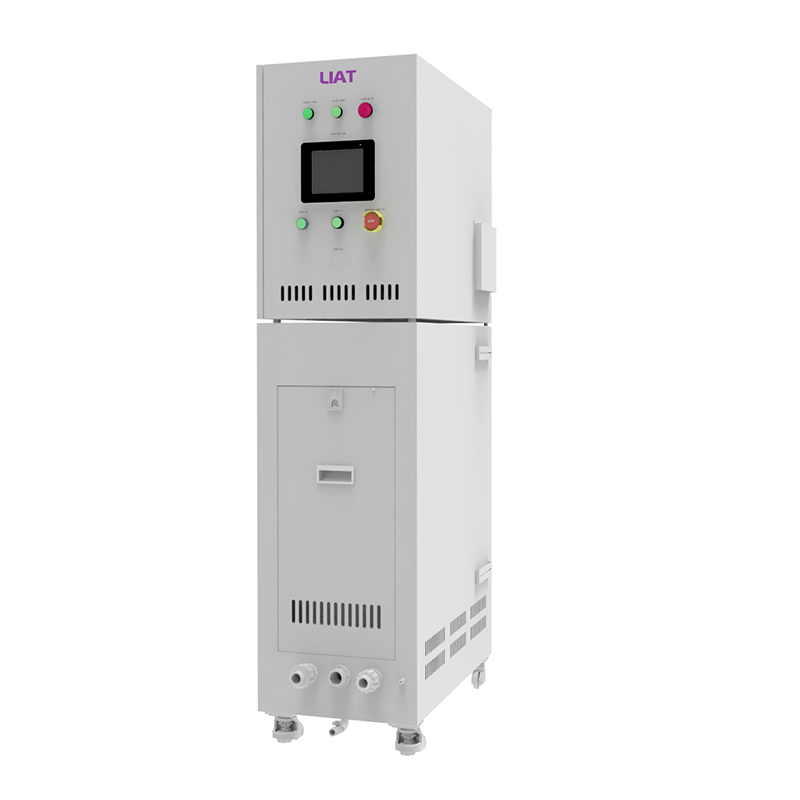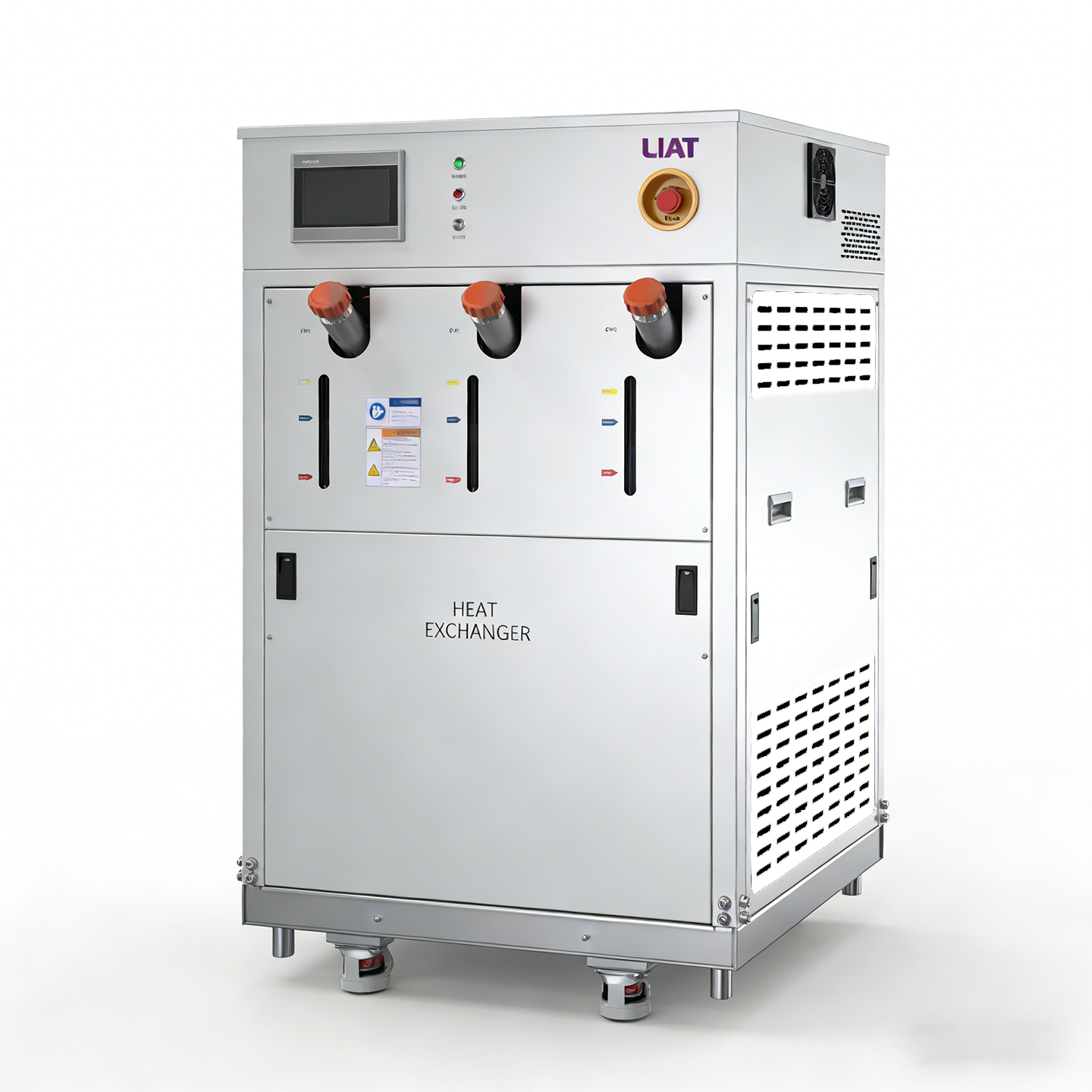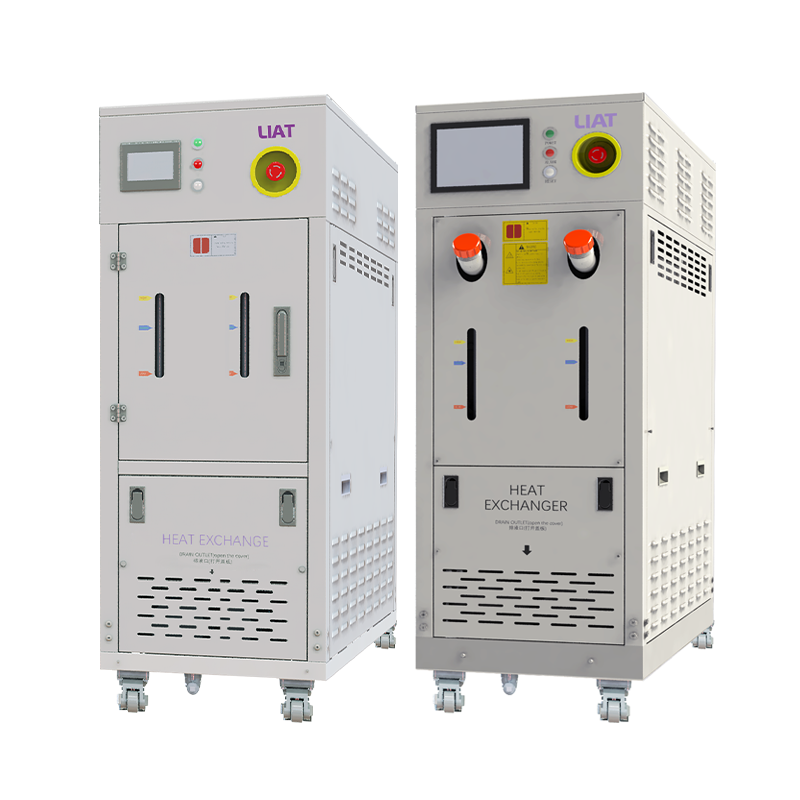
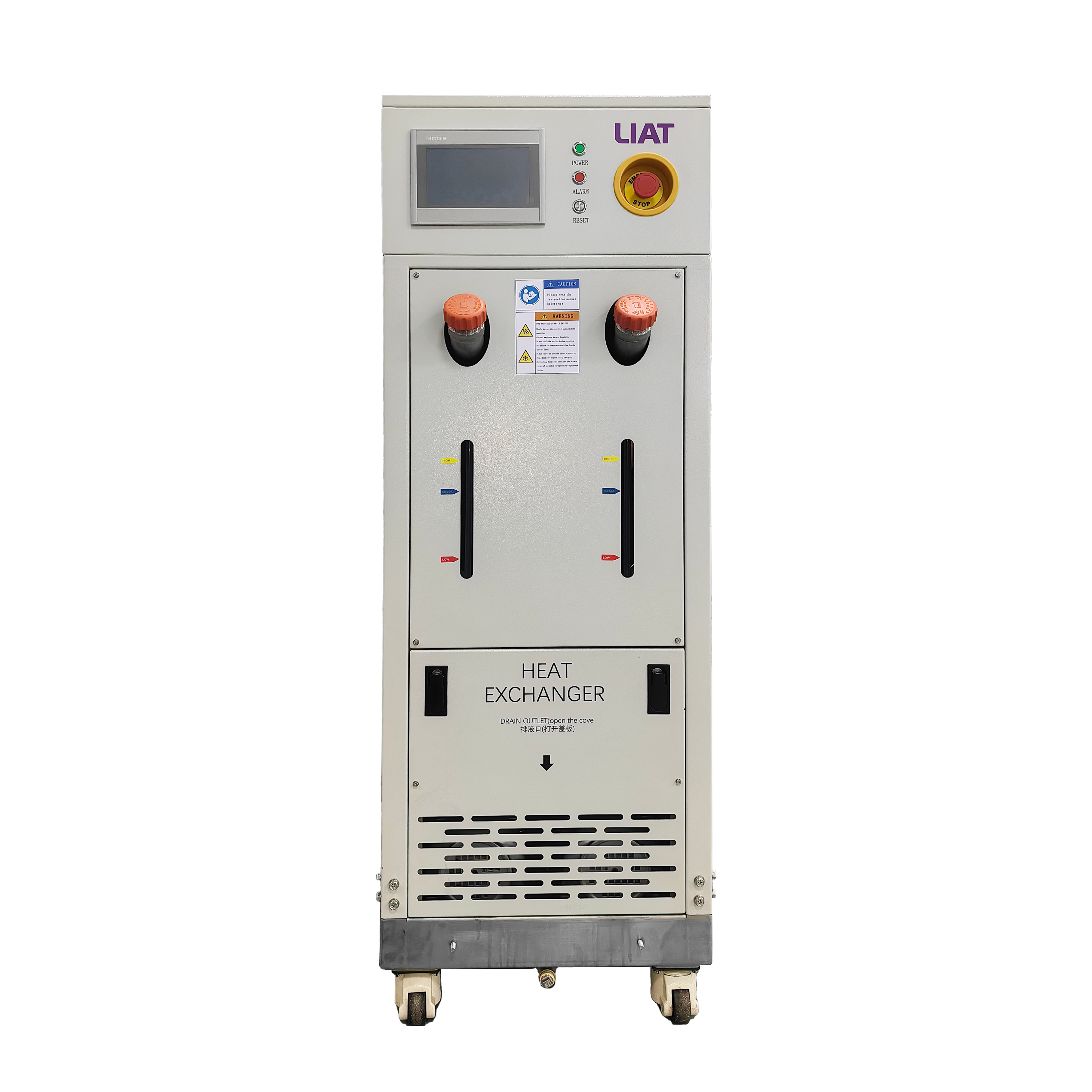
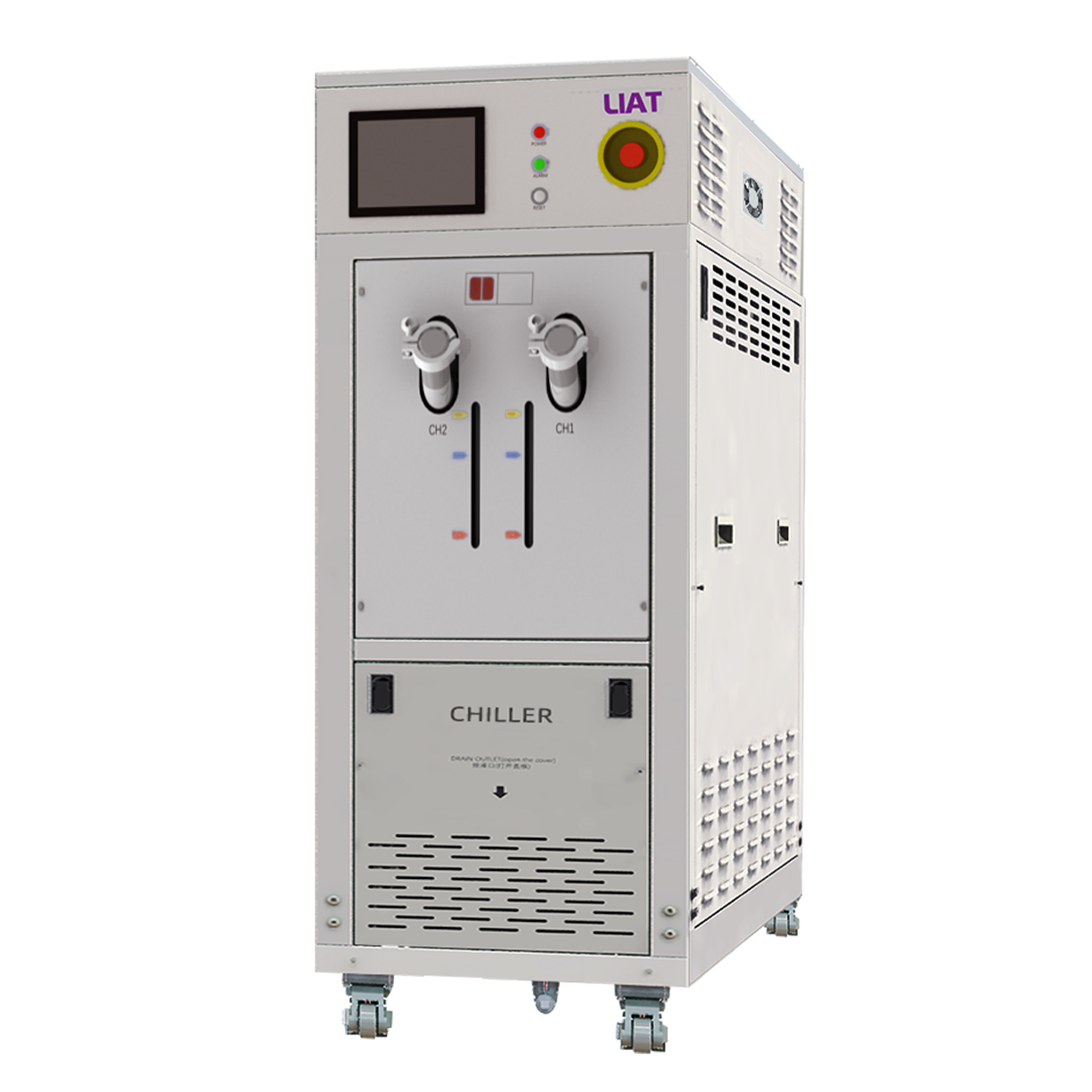
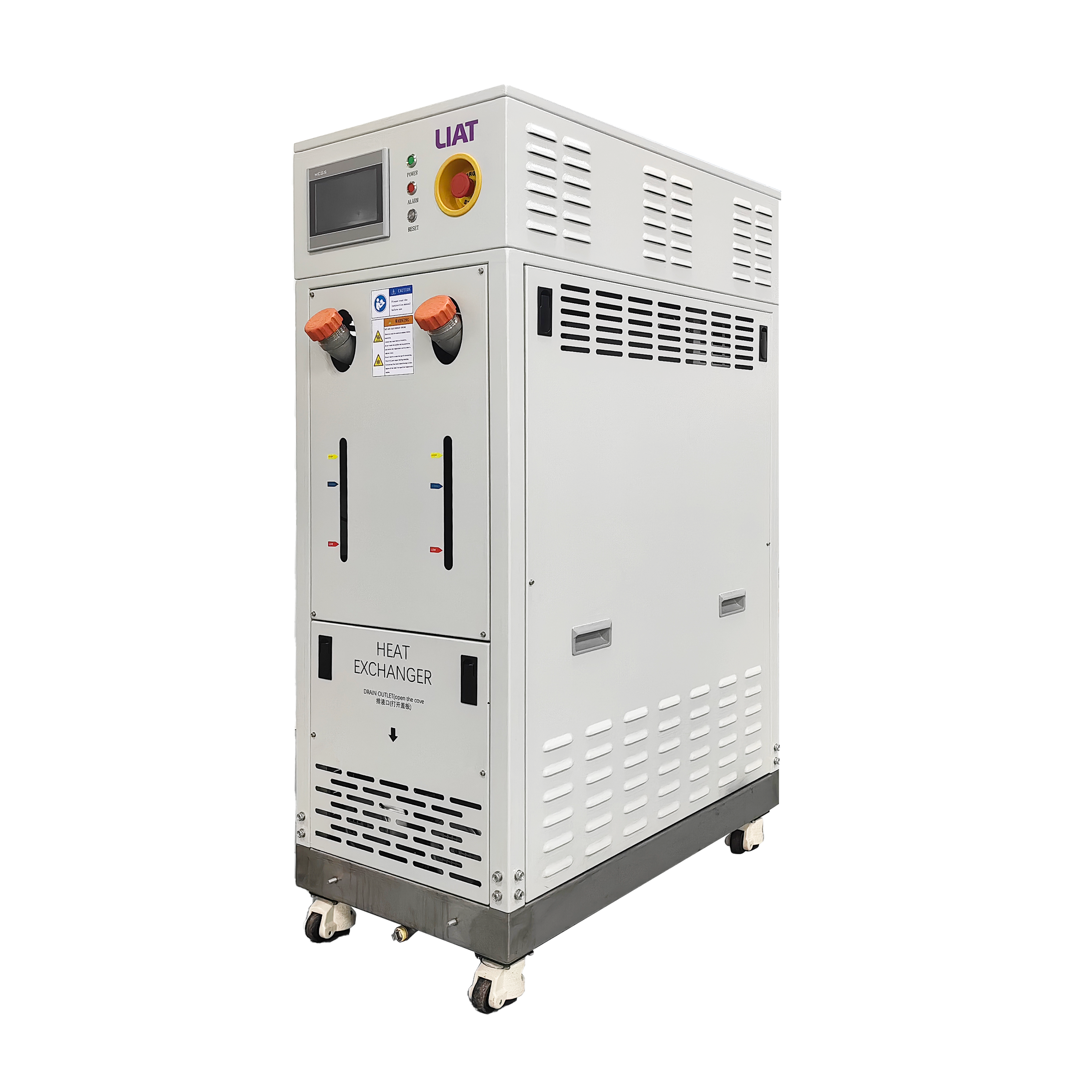
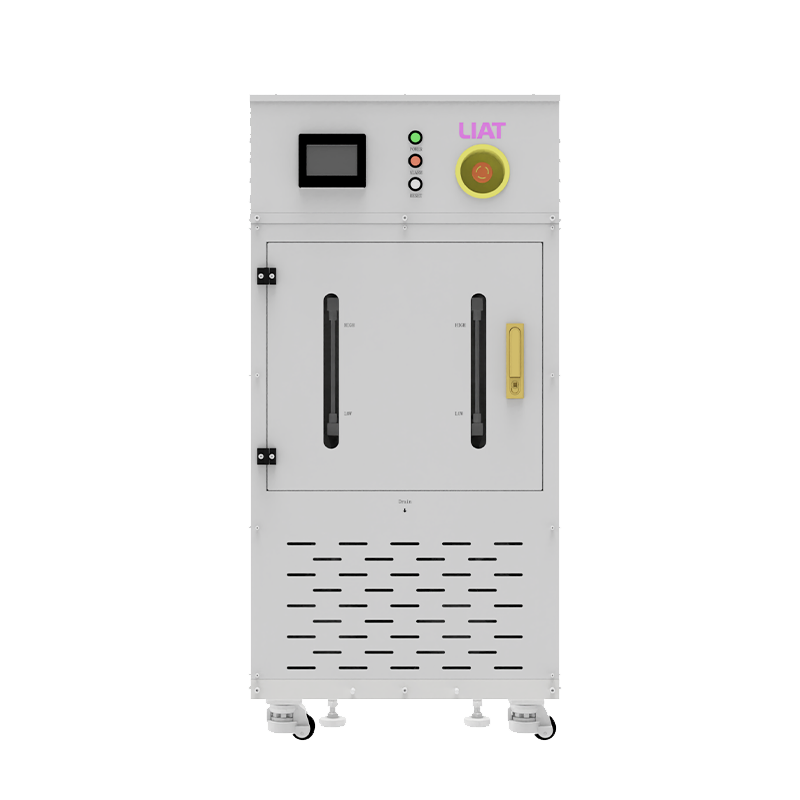
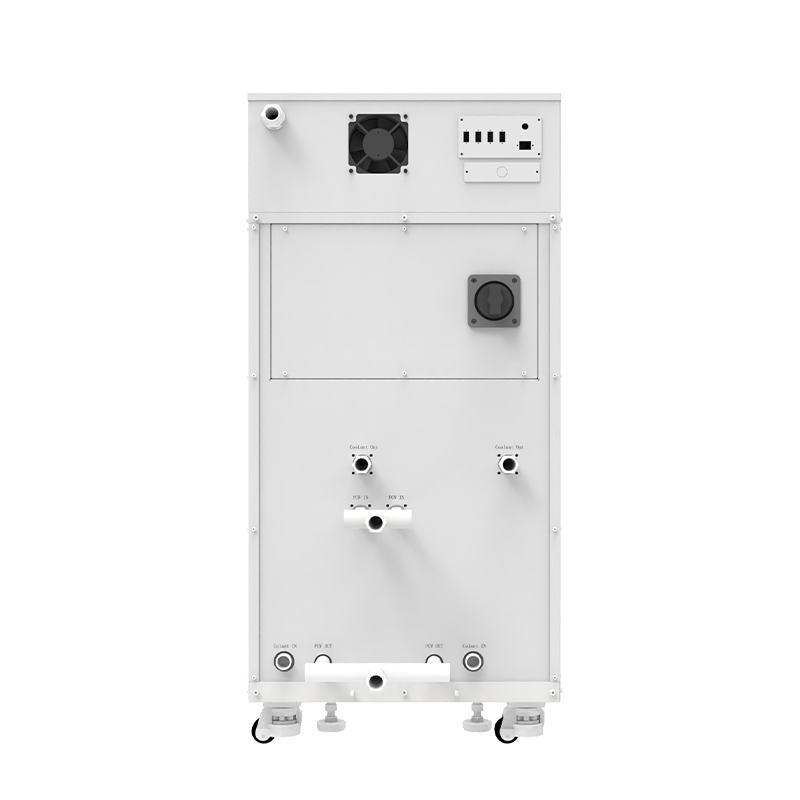
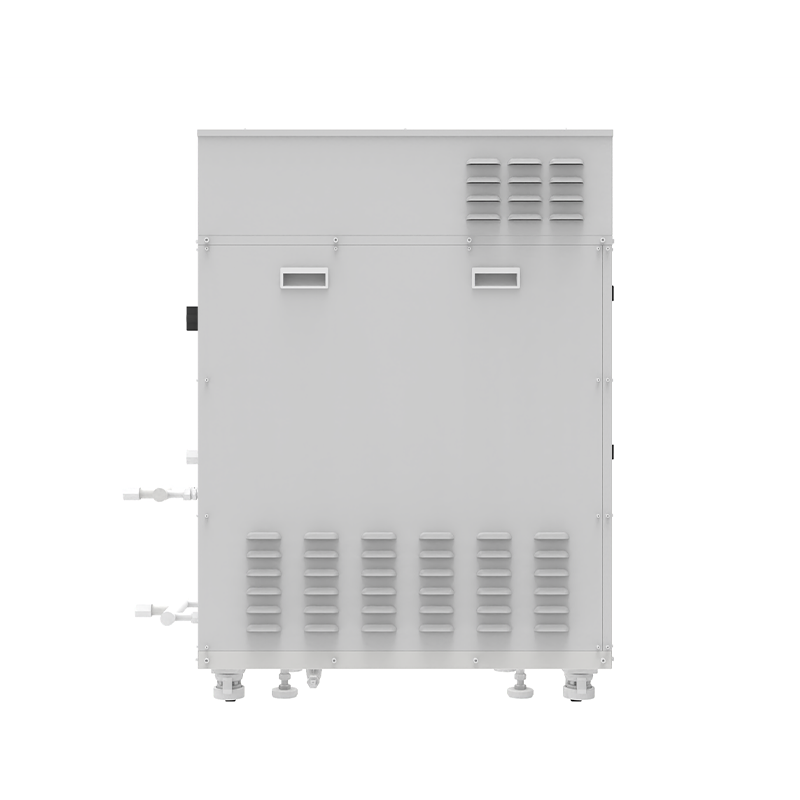
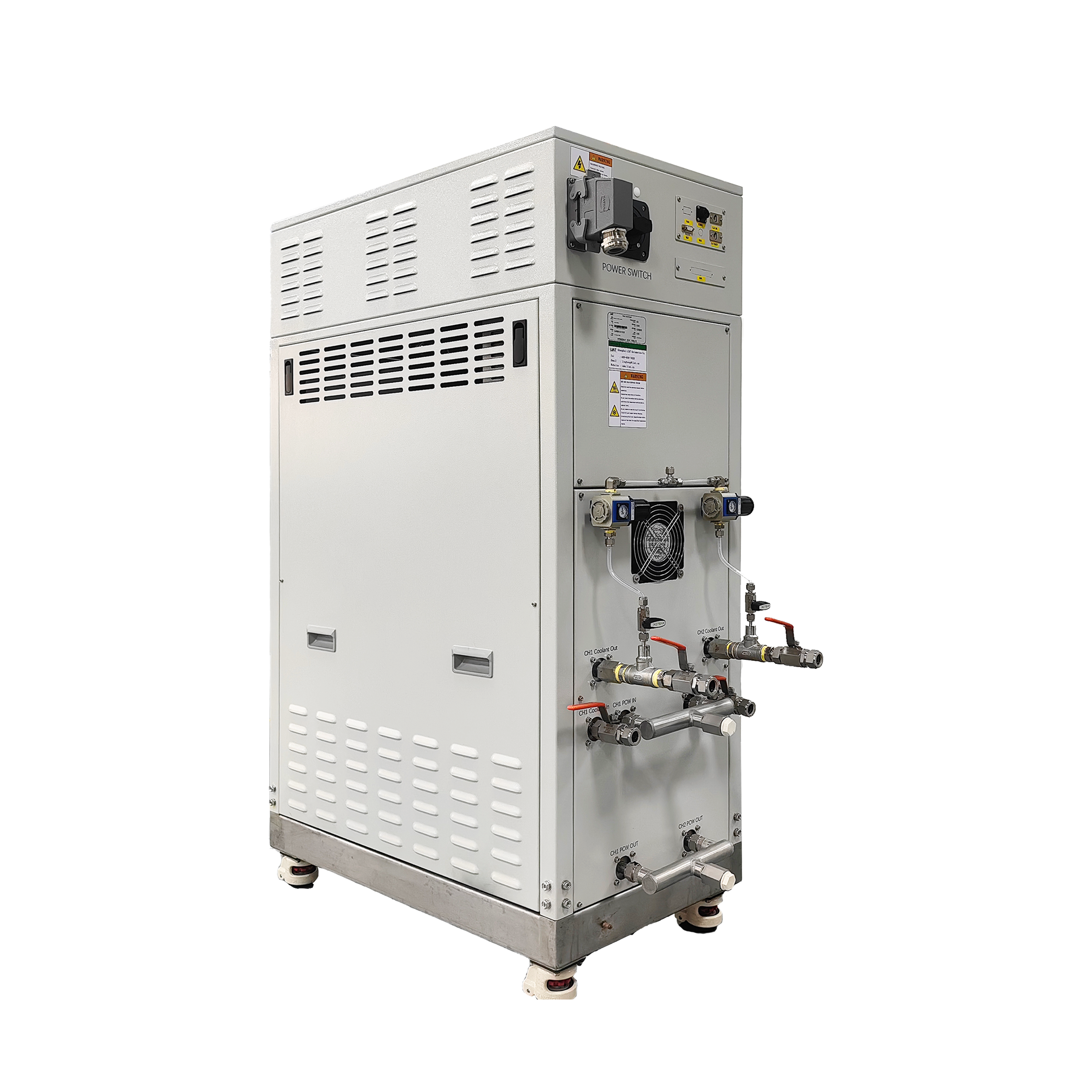
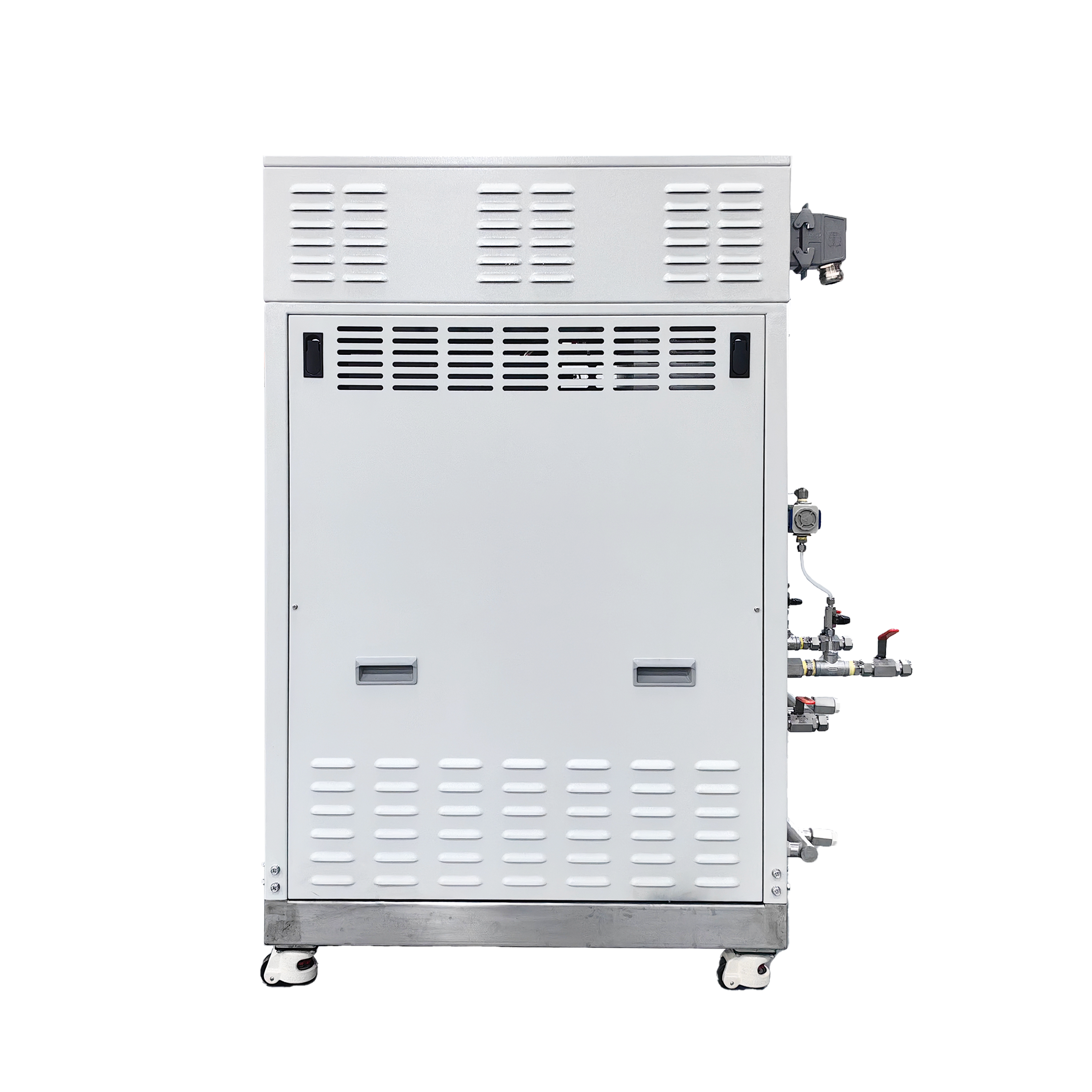
Dual Channel Heat Exchangers
Temperature Stability: ±0.1℃
Temperature Range: 30℃~+200˚C
Heating Capacity: -40℃@6 KW/20℃@25 KW
Advanced PLC control with PID algorithms achieves ±0.1℃ precision temperature regulation of process fluid. This system is deployed across critical thermal management scenarios:
Semiconductor manufacturing equipment
New energy testing platforms
Medical diagnostic devices
Industrial laser systems

- Overview
- Recommended Products
- 15+ Years of Industrial Thermal Management Experience
- Strict Quality Inspection Before Delivery
- Fast Global Shipping
01 Why Choose LIAT Dual Channel Heat Exchanger
|
Independent Dual Cooling Loops Each heat exchange circuit operates independently, allowing two different production processes to run simultaneously with separate cooling conditions. |
High Heat Transfer Performance Premium plate heat exchanger technology delivers efficient thermal transfer while minimizing energy consumption. |
Space-saving Design One dual-channel unit replaces two separate heat exchangers, reducing installation space and simplifying system integration. |
Low Pressure Loss Optimized internal flow channels maintain excellent heat transfer while reducing pumping energy. | Flexible Customization Heat transfer capacity, flow rate, materials, communication protocol, and controller can all be customized. |
Worldwide Engineering Support
Professional thermal engineers provide project consultation, commissioning assistance, and after-sales technical support worldwide. |
02 Powerful performance
Performance Highlights |
Technical Overview |
Key Advantages | |
|
• Two Independent Cooling Loops • High Heat Transfer Efficiency • Complete Cooling Isolation • Low Pressure Drop • Compact Installation • Easy Maintenance • Energy-saving Operation • Stable Long-term Performance
|
• Dual Independent Heat Exchange Circuits • High-efficiency Plate Heat Exchanger • Closed-loop Cooling Design • Independent Flow Control • PLC Intelligent Controller • Optional Temperature Monitoring • Flexible Integration
|
|
|
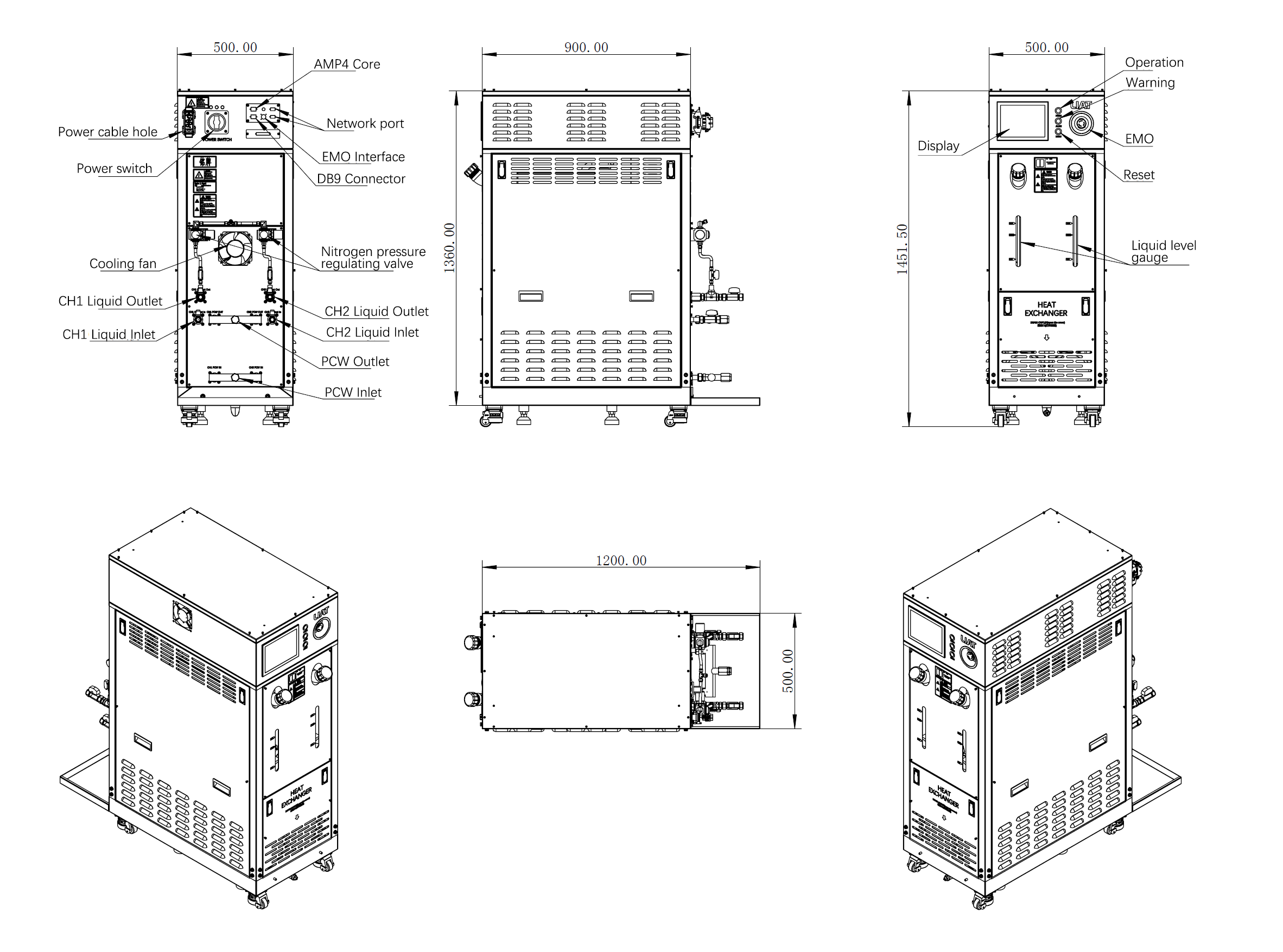
Structure Design |
Structure diagram |
Core Components |
Heat Exchange System |
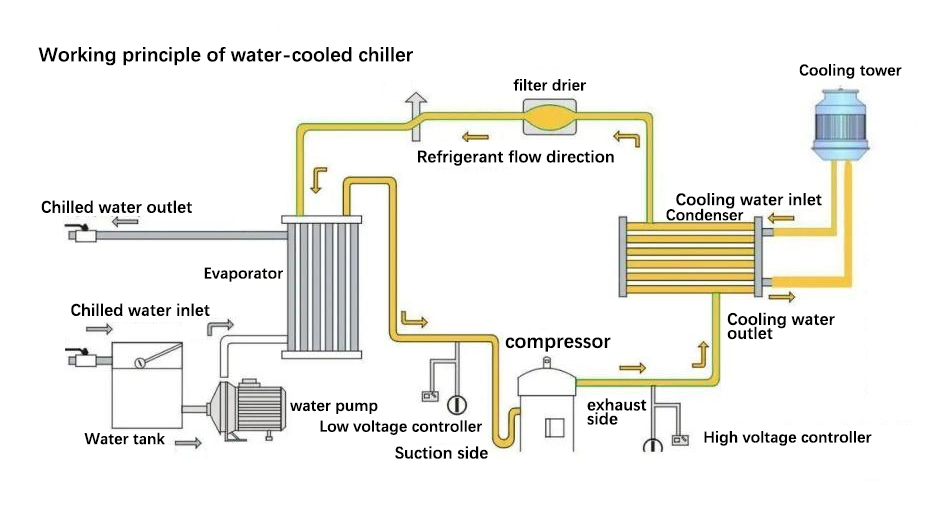
Working Principle |
|
• Dual Modular Heat Exchange Units • Compact Industrial Cabinet • Front Maintenance Access • Flexible Piping Layout • Heavy-duty Construction |
|
• Brazed Plate Heat Exchangers • Independent Circulating Pumps • Flow Sensors • Temperature Sensors • Stainless Steel Pipelines • PLC Intelligent Controller |
Two independent liquid-to-liquid heat exchange circuits operate simultaneously while maintaining complete isolation between process fluids.
|
① Two independent process loops circulate separately. ② Heated liquid enters its dedicated plate heat exchanger. ③ Cooling liquid absorbs thermal energy. ④ Independent flow control maintains stable cooling. ⑤ Both systems operate simultaneously without interference. |
03 Performance Description
Each heat exchange circuit transfers thermal energy independently while completely separating the process fluids. The intelligent control system continuously monitors operating conditions to ensure stable heat transfer efficiency and reliable cooling performance.
04 Applications
 Semiconductor Manufacturing Semiconductor Manufacturing |
 Laser Equipment Laser Equipment |
|
|
|
|
|
|
|
|
 Battery Production
 Laboratory Systems
 Medical Equipment
 Industrial Automation
 Chemical Processing
05 Technical Details
Structure Design |
Core Components |
Heat Exchange System |
|
• Compact Modular Cabinet • Industrial-grade Construction • Easy Maintenance • Flexible Installation • Optimized Airflow Design |
• High-efficiency Scroll Compressor • Plate Heat Exchanger • Electronic Expansion Valve • Industrial Circulating Pump • Precision Temperature Sensors • PLC Intelligent Controller |
The liquid cooling system continuously removes heat from batteries and power electronic equipment while maintaining precise temperature control under varying operating conditions. |
06 Working Principle
① Two independent process loops circulate separately.
② Heated liquid enters its dedicated plate heat exchanger.
③ Cooling liquid absorbs thermal energy.
④ Independent flow control maintains stable cooling.
⑤ Both systems operate simultaneously without interference.
07 Specifications
| HPD008/012 Product parameters | ||||
| Producte | Heat Exchange HPD008 | Heat Exchange HPD012 | ||
| Product model | HPD008-W-32W | HPD012-32F2 / W-32F3 | ||
| Cooling method | Water cooled heat exchange type | |||
| Control mode | PID Control | |||
| Temperature Control Range | 30℃~90℃ / 30℃~120℃ | +30℃~+140℃ / +30℃~+200℃ | ||
| precision | ±0.1℃ | |||
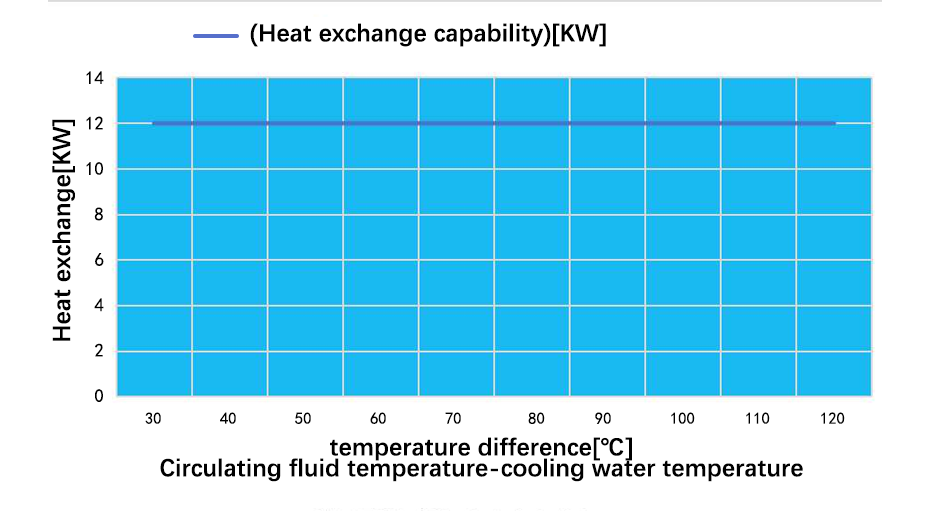
| Heat exchange | CH1:8kW | CH2:8kW | CH1&CH2:12 KW@PCW+10˚C | |
| Power | CH1:3kW x2 | CH2:3kW x2 | CH1&CH2:3 KW x 2 | |
| Tank | CH1:20L | CH2:20L | CH1:20 L | CH2:20 L |
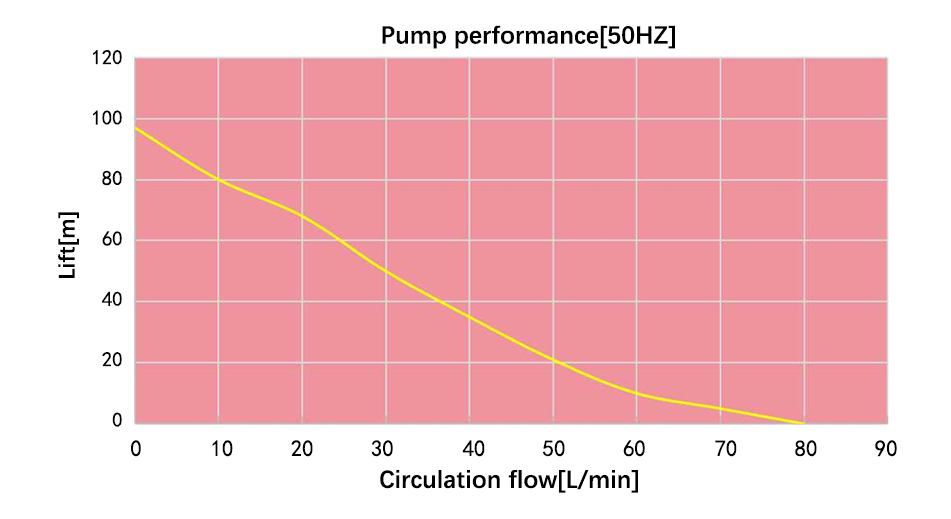
| Circulating liquid flow rate | CH1:20L/min(0.65MPa) | CH2:20L/min(0.65MPa) | CH1&CH2:20L/[email protected] | |
| PCW traffic | 15L/min@15~25℃ | 15L/min@15~25℃ | 15L/min@15~25℃ | 15L/min@15~25℃ |
| Temperature range | 5~35℃ | |||
| Types of circulating fluid | Ethylene glycol mixture, pure water/DI Water | Fluorinated Liquid | ||
| Circulating liquid interface | Ethylene glycol mixture, pure water/DI Water | Fluorinated Liquid | ||
| PCW interface | Rc 1/2“x2 | Rc 3/4" x 2 | ||
| External dimensions(mm) | 600W*900D*1250H | 500W*900D*1500H | ||
| Input power supply | 3Ph,208-220V,50Hz | |||
| Whole machine power | 14.7kW | 15.5 KW | ||
| Net weight | 350kg | 300 kg | ||
| Design standards | SEMI | |||
08 Why Choose LIAT
 |
 |
 |
 |
 |
 |
09 Frequently Asked Questions
 What is a Dual Channel Heat Exchanger?
A Dual Channel Heat Exchanger integrates two independent liquid-to-liquid heat exchange circuits into one compact system, allowing two production processes to be cooled simultaneously.
 What are the advantages of a dual-channel system?
It reduces installation space, simplifies piping, lowers maintenance costs, and improves overall cooling efficiency compared with two separate heat exchangers.
Are the two cooling loops completely independent?
Yes. Each loop has its own heat exchanger and flow path, ensuring complete isolation between cooling circuits.
Can LIAT customize the system?
Yes. Heat transfer capacity, materials, flow rate, control system, communication protocol, and piping configuration can all be customized.
Which industries commonly use this equipment?
Semiconductor manufacturing, laser processing, battery production, laboratories, medical equipment, automation systems, and chemical processing.
How can I request a quotation?
Provide your required cooling capacity, operating temperature, application, and installation requirements. Our engineers will recommend the most suitable model within 24 hours.