
What an Industrial Water Chiller Handles in Heavy Production
In heavy production, an industrial water chiller is not simply a cold-water source. It is a controlled heat-removal system that removes unwanted process heat from equipment and returns fluid at a defined operating condition. That duty matters when a line runs for long shifts, when a temperature swing changes product quality, or when a test rig must repeat the same thermal cycle. For production engineers, the useful question is not “how cold can it get?” but “what heat, flow, temperature, and operating variation must this system manage?”
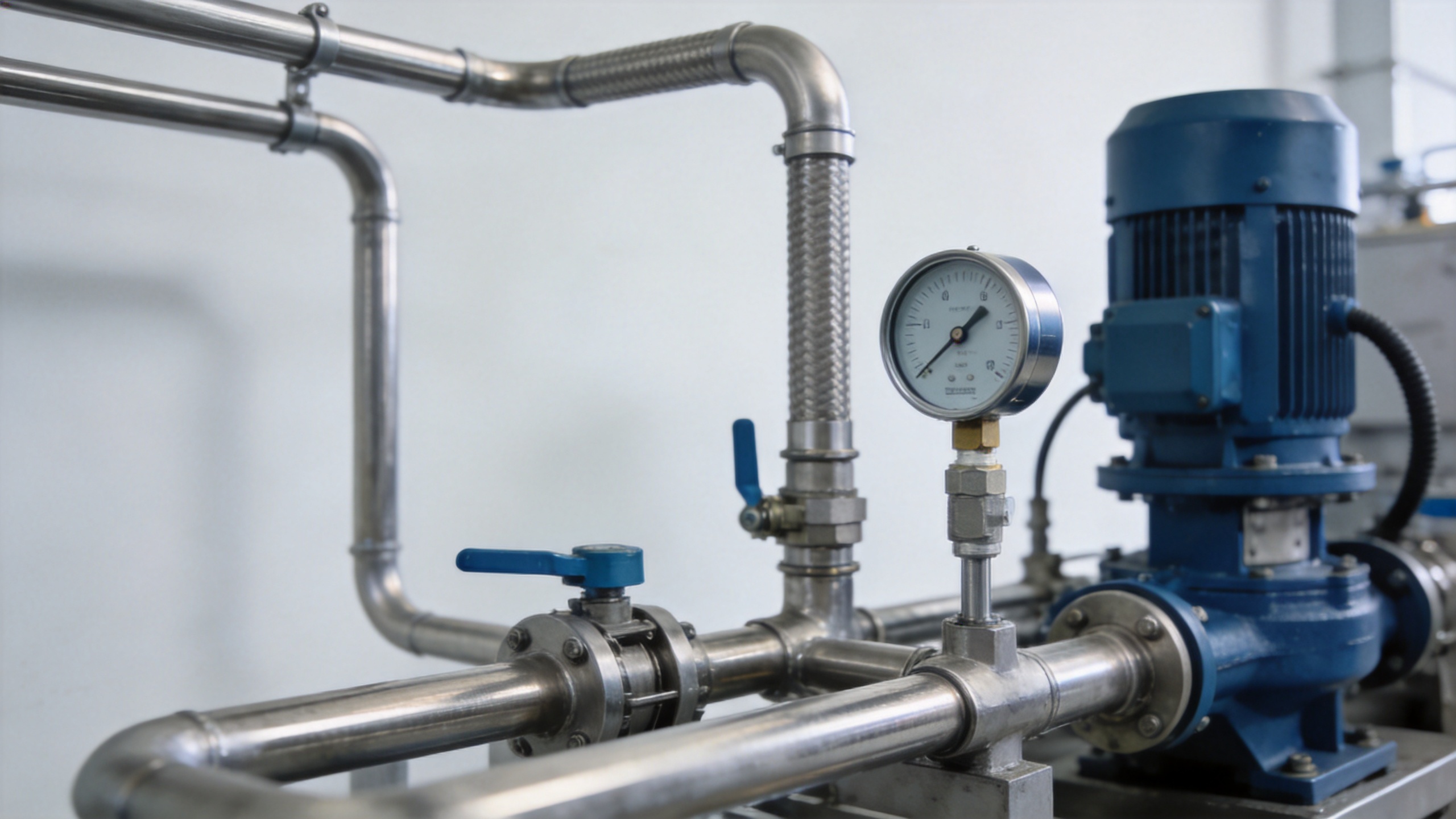
An industrial water chiller typically serves a closed loop between the refrigeration circuit and the process. Fluid leaves the unit, travels through piping to a mold, reactor jacket, laser source, test fixture, or exchanger, absorbs heat, and returns warmer. The chiller removes that heat and sends conditioned fluid back again. A stable loop supports repeatable production decisions without treating the chiller as an isolated box.
The Heat Duties an Industrial Water Chiller Takes On
The first job of an industrial water chiller is to absorb heat generated by a process. In plastics work, that may be heat transferred from tooling. In battery or electronics testing, it can be heat from a controlled load. In chemical or pharmaceutical equipment, it may be the heat released or accumulated during a batch. Machine spindles, welders, lasers, and hydraulic systems can also put a continuous thermal load on a cooling loop.
Heavy production makes this duty less forgiving because the load may continue for hours rather than appearing only in short bursts. An industrial water chiller therefore has to be evaluated at the real operating point: required leaving-fluid temperature, returning-fluid temperature, flow rate, ambient condition, fluid type, and total heat load. A nominal capacity printed at a different condition is only a starting point for discussion.
For a water loop, a preliminary calculation often uses the relationship: cooling load in BTU per hour equals flow in gallons per minute multiplied by 500 and by the temperature difference across the loop. The calculation helps frame an industrial water chiller inquiry, but it does not replace confirmation of actual process load, startup peaks, heat gain from piping, or the properties of a glycol mixture.
Keeping the Process, Not Just the Outlet, Within Range
A common production mistake is to focus only on the display at an industrial water chiller. The process inlet can be warmer than the chiller outlet because of pipe length, insulation condition, pump heat, and flow restrictions. A useful commissioning plan checks temperatures at both ends of the loop, along with pressure, flow, and the response during a real production cycle.
The target temperature also depends on the equipment being cooled. A lower setpoint is not automatically a better setting. It can change available capacity, increase condensation concerns, or create a larger temperature gradient than the process needs. An industrial water chiller should be matched to the acceptable process band and the thermal behavior of the load, not selected solely for the lowest possible fluid temperature.
Many standard process applications can operate with a temperature-control band measured in a few degrees, while precision work may need a tighter, verified band. The right specification describes where the temperature is measured, how quickly the load changes, and what variation the process can accept. Those details give an industrial water chiller supplier a basis for configuring controls and circulation components appropriately.
What Happens Around the Chiller Loop
An industrial water chiller supports several connected functions at once:
- Circulation: a pump moves the selected fluid through piping and the process heat exchanger.
- Heat exchange: the evaporator transfers heat from the returning process fluid into the refrigeration circuit.
- Heat rejection: the condenser releases that collected heat to air or to a separate water circuit, depending on the system arrangement.
- Control: sensors and controls compare actual conditions with the required setpoint and respond to changing demand.
- Protection: alarms and interlocks can draw attention to low flow, high pressure, abnormal temperature, or other conditions that need review.
Because these functions interact, an industrial water chiller can appear to be undersized when the underlying issue is inadequate flow, a fouled exchanger, incorrect valve position, or a process load that was not included in the original estimate. Reviewing the loop as a system reduces that uncertainty.
Production Applications That Create Sustained Thermal Demand
An industrial water chiller is often used where a production asset produces heat faster than the surrounding environment can remove it. Tool and mold cooling, extrusion, coating equipment, machining, material testing, energy-storage testing, and laboratory-scale process equipment are examples. The equipment differs, but the thermal question is similar: can the loop remove heat at the required rate while maintaining a usable supply condition?
In continuous lines, an industrial water chiller also helps operators distinguish a temporary disturbance from a trend. If the return temperature climbs during full-rate operation, the record can point to a growing load, reduced heat transfer, a flow issue, or a change in ambient heat rejection. That makes process data more useful than a single snapshot taken while the line is idle.
A Practical Duty Checklist Before Selecting an Industrial Water Chiller
Before discussing a specific industrial water chiller, collect the information that defines the duty:
- What equipment or process receives the fluid, and how many loads may run together?
- What supply temperature and return temperature are required at the process connections?
- What flow rate, pressure requirement, piping length, and elevation must the pump handle?
- Is the load steady, cyclic, seasonal, or prone to high startup peaks?
- Will the loop use water, a water-glycol mixture, or another compatible fluid?
- How will condenser heat be rejected, and what site conditions affect that choice?
- Which alarms, communications, service access, and redundancy measures fit the production risk?
This list turns a broad request for an industrial water chiller into an engineering conversation. It also helps separate equipment capacity from system performance: a capable unit still needs suitable piping, clean heat-exchange surfaces, correct fluid treatment, and controls that reflect the real production objective.
How to Use the Information in a Project Review
For plants expanding a line or replacing aging cooling equipment, start with logged conditions rather than assumptions. Record supply and return temperatures, flow, load timing, ambient conditions, and any alarms during representative production. Then compare those records with the required process range. This approach gives an industrial water chiller project a clearer basis for capacity, temperature control, and integration decisions.
Lingheng Thermal Control Technology (Suzhou) develops precision temperature-control and thermal-management systems for industrial applications including new energy, semiconductor, chemical, and aerospace-related work. When a project needs an industrial water chiller, the most useful specification connects the unit to the process: heat load, fluid, target range, flow, interfaces, and the conditions the plant must sustain.
Conclusion
An industrial water chiller handles more than refrigeration. In heavy production, it manages the flow of heat through an entire process loop so equipment can operate within defined thermal conditions. By checking real load, flow, process temperatures, and heat-rejection conditions before selection, teams can define a system that fits their production duty and provides a sound basis for commissioning and ongoing review.
 Hot News