
How to Evaluate an Industrial Cooling System Manufacturer
Choosing an industrial cooling system manufacturer is not simply a matter of comparing catalog capacities. A process cooler has to work with a real thermal load, a particular fluid, operating temperatures, controls, piping, and the people who will maintain it. From a procurement perspective, the useful question is not “Which supplier has the longest feature list?” It is “Which industrial cooling system manufacturer can show how its proposal fits the conditions we can confirm?”
This approach gives engineering, purchasing, and operations a shared way to compare an industrial cooling system manufacturer. It also makes early discussions more productive when some site data is still being collected.
Start with the process, not the brochure
Before approaching an industrial cooling system manufacturer, organize the information that defines the duty. Selection guidance for process cooling commonly considers actual heat load, target outlet temperature, temperature stability, flow rate, pump pressure, and site constraints. Those items are connected: a stated cooling capacity does not explain whether the proposed industrial cooling system will hold a required temperature while the load changes.
- What temperature range and stability band does the process need?
- What is known about steady, peak, and changing heat load?
- Which heat-transfer fluid, cleanliness requirements, and material compatibility conditions apply?
- What flow, pressure, piping length, elevation, and connection constraints exist?
- Will ambient conditions, installation space, power supply, or ventilation limit the layout?
A capable industrial cooling system manufacturer should use these inputs to ask clarifying questions, not rush to a model number. If values are estimated, label them as estimates and agree on what needs verification before design release.
Compare technical fit in a decision tree
Use the same comparison sheet for every industrial cooling system manufacturer. Begin with the required process conditions. Then compare how each supplier connects capacity, temperature control, circulation, safety devices, and controls to those conditions. This stops a discussion from becoming a list of isolated specifications.
Temperature and load response
Ask each industrial cooling system manufacturer to explain the basis for its temperature-control recommendation. Request the operating condition behind the claim: fluid, entering temperature, return temperature, load profile, and ambient condition. For a process with heat spikes or changing production steps, ask how the system is expected to respond and which assumptions still need site confirmation.
Hydraulic and fluid compatibility
An supplier should review circulation needs with the same care as cooling duty. Flow rate, pump head, pressure drop, pipe routing, valves, filters, and heat exchanger restrictions can all affect delivered performance. The supplier should also identify compatibility questions for water, water-glycol mixtures, or another approved process fluid rather than treating fluid choice as a minor detail.
Controls and integration
For an industrial cooling system, setpoint control is only one part of integration. Ask an supplier which signals, alarms, interlocks, communication methods, and remote-monitoring options are available. Confirm who is responsible for control logic at the equipment boundary. A written connection boundary list is more useful than an assumption that separate systems will communicate as intended.
Examine the evidence behind the proposal
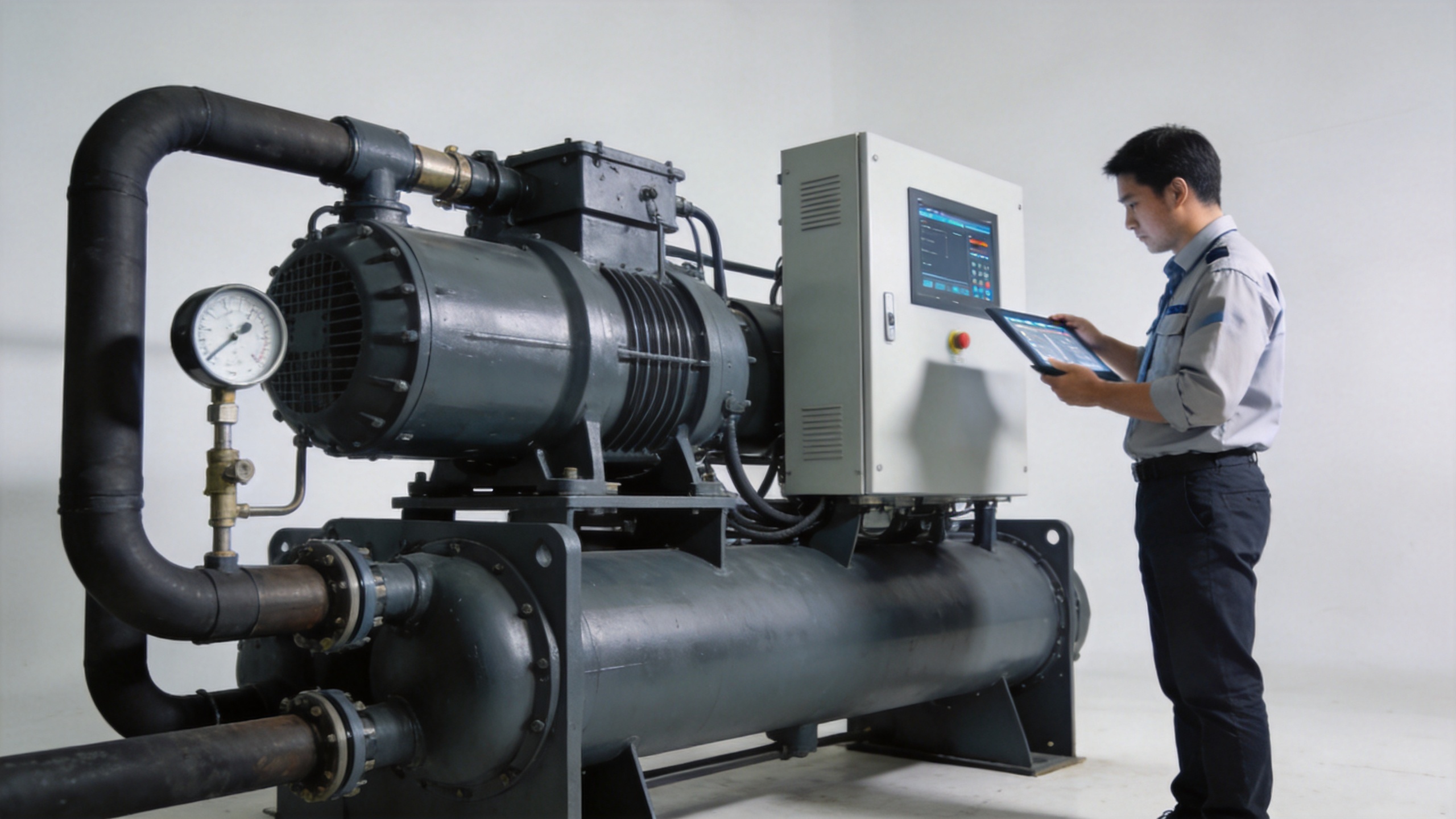
Technical language is more credible when an supplier can connect it to project evidence. Ask for a proposal that states the design inputs, assumptions, exclusions, utility requirements, footprint, and connection information. Where an input is unknown, request a clearly marked validation item rather than an unqualified conclusion.
Also review the handover package. Commissioning guidance emphasizes operations and maintenance documentation as well as prepared operating and maintenance personnel. For an supplier, that means the conversation should include installation guidance, startup sequence, alarm interpretation, routine inspection points, parts identification, and escalation paths. These details help an operations team judge whether an industrial cooling system can be supported after delivery.
Assess manufacturing and project communication
Evaluate how an supplier manages the project, not just the equipment. Useful signs include a structured data-request list, prompt identification of missing inputs, clear revision control, and a practical explanation of testing and acceptance. For a focused cooling installation, procurement may need to coordinate information from process engineering, facilities, controls, and maintenance. A supplier that turns those discussions into an actionable checklist can reduce ambiguity before installation.
Ask what documentation will accompany each milestone and how changes to load, fluid, or control connections will be handled. An supplier does not need to make broad promises to be helpful; it should explain which questions it can answer now and which require testing, drawings, or on-site data.
Look beyond the initial quotation
The lowest initial figure may not show the full operational picture. Compare an supplier on maintainability, access for inspection, consumables, service response process, spare-part identification, and the documentation available to the local team. For an cooling installation that supports a critical process, those factors affect planning and troubleshooting long after installation.
Ask suppliers to describe routine tasks in plain language. Which readings should be logged? Which conditions trigger inspection? What site information will support a remote diagnosis? Responses to these questions reveal whether the supplier has considered the operating environment as well as the equipment itself.
Use a consistent supplier scorecard
Give each supplier the same weighted questions:
- Does the proposal state the process inputs and unresolved assumptions?
- Does it explain temperature, load, flow, fluid, and connection boundary fit for the cooling installation?
- Are controls, alarms, installation limits, and utility requirements defined?
- Is the test, commissioning, and documentation plan clear?
- Can operations understand maintenance needs and obtain support information?
Use the scorecard as a discussion tool, not a substitute for engineering validation. The right supplier is the one whose documented approach aligns with the confirmed duty and whose open items can be resolved before acceptance. That is a stronger basis for a durable cooling installation decision than comparing a single capacity figure.
 Hot News