
What Insulation Does a Pipe Heating System Need for Energy Efficiency?
A pipe heating system loses energy whenever heat travels from a hot pipe surface into the surrounding air, a support, or an adjacent structure. The right insulation slows that transfer, helps stabilize process temperature, and can improve personnel protection. But insulation is not a one-material answer. For a pipe heating system, the correct material, thickness, jacketing, and installation details depend on operating temperature, pipe size, ambient conditions, moisture exposure, and whether the line needs regular access.
From a thermal-management application engineer’s perspective, the useful starting point is not a catalogue thickness. First define the process temperature, heat loss that the pipe heating system can tolerate, pipe geometry, and the actual service environment. Only then can a designer compare insulation options in a meaningful way.
Start With the Service Conditions of the Pipe Heating System
Before specifying a pipe heating system, document the normal and maximum pipe temperature, the fluid or product being heated, the pipe diameter, the route length, indoor or outdoor exposure, wind, washdown, and maintenance access. A line that carries a viscous material at a steady temperature has different insulation needs from a frequently cycled line with a pipe heater jacket.
The same material can perform differently as its mean temperature changes. Low thermal conductivity is desirable because it resists heat flow, but the published value should be checked at the temperatures the pipe heating system will actually see. A thin layer that seems adequate at moderate temperature may allow excessive loss at a higher process temperature or on a large-diameter line.
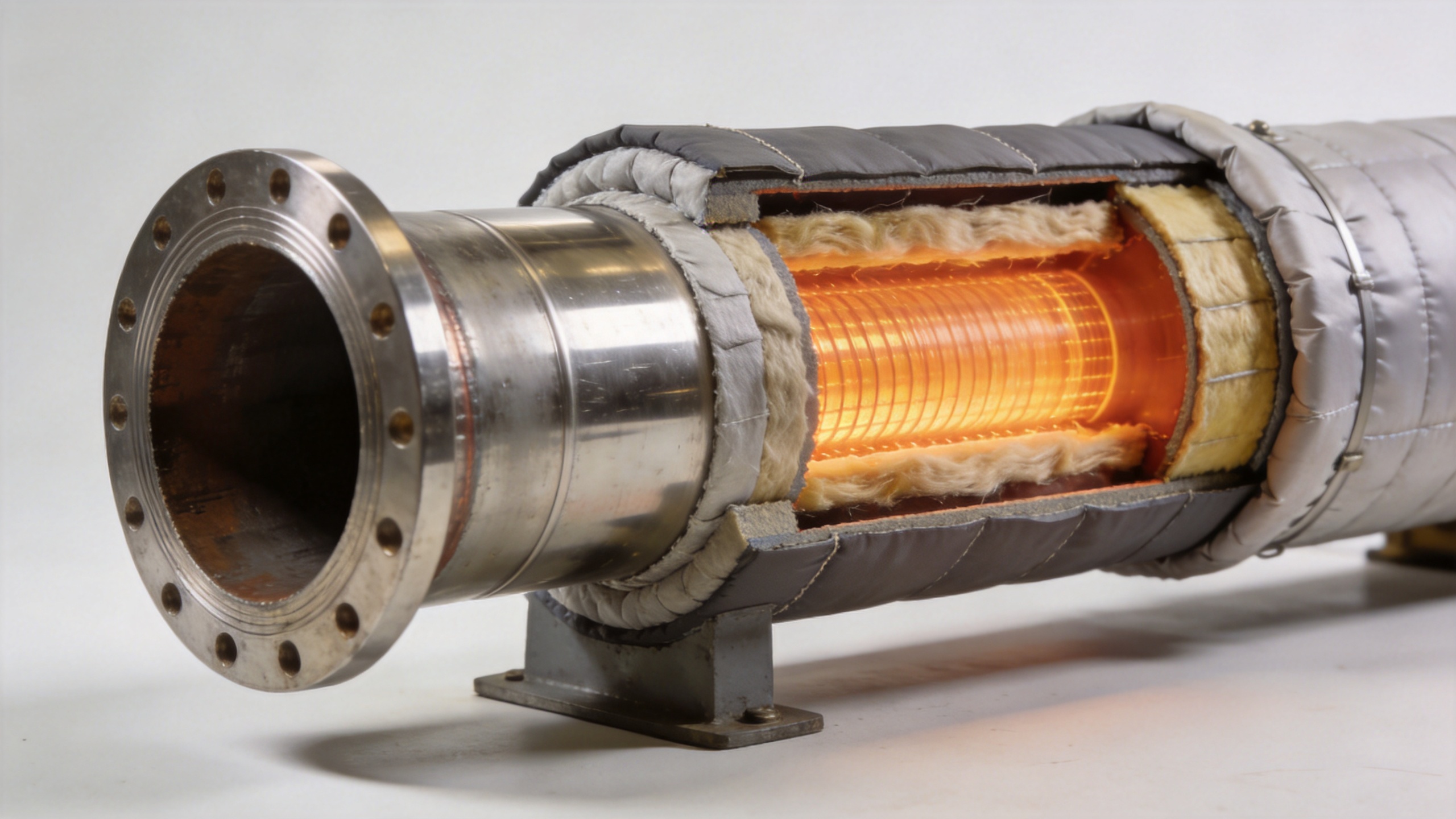
Heat tracing or a heating jacket also changes the conversation. The insulation for a pipe heating system should retain useful heat around the line without pinching, abrading, or leaving gaps around the heater. It must be compatible with the tracing layout, sensor locations, valves, flanges, and any removable sections needed for inspection.
Choose the Insulation Family Before Choosing Thickness
For many hot industrial lines, mineral-fiber pipe sections are a practical option when their temperature rating, facing, and jacket construction suit the duty. ASTM C547 is one example of a specification covering mineral-fiber pipe insulation formed as hollow cylinders for standard pipe and tubing sizes. That reference is a useful procurement check, not a substitute for confirming the required temperature range and system design.
Foam-based products can be considered where their temperature limit, fire properties, mechanical protection, and moisture behavior fit the application. In wet or corrosion-sensitive service, closed-cell or vapor-resistant assemblies may be more relevant than a generic hot-service blanket. The material choice for a pipe heating system should also account for compression resistance at supports and the protection needed under metal cladding.
Do not select insulation solely because it has the lowest quoted conductivity. A pipe heating system needs an assembly: insulation, joints, vapor or weather protection when required, support treatment, and a jacket that matches the environment. A weak seam or damaged outer layer can undermine the thermal design.
Set Thickness From a Calculation, Not a Rule of Thumb
Thickness is the main lever for reducing surface heat loss from a pipe heating system, but added thickness should be evaluated against the duty rather than assumed to improve every result. The useful thickness balances energy loss, surface-temperature goals, material cost, installation space, and maintenance access. It should be selected with a heat-loss and surface-temperature calculation using the pipe diameter, process temperature, ambient temperature, air movement, insulation conductivity, and outer-surface emissivity.
For a pipe heating system in a personnel-access area, the calculation may include an allowable surface temperature as well as energy conservation. For outdoor service, wind, rain, ultraviolet exposure, and metal-jacket durability should be considered. For an indoor process line, the key question may be whether the insulation keeps the fluid within its required operating band between heater-control cycles.
A good specification states the design inputs and acceptance conditions rather than just naming a nominal thickness. Ask the supplier or engineering team to show the assumed conductivity temperature, ambient conditions, pipe size, and expected outer-surface temperature. This makes the pipe heating system easier to review when the duty changes.
Manage Moisture and Thermal Bridges
Moisture management matters even when the primary duty is heating. Research on mechanical pipe insulation has found that water-vapor entry can increase thermal conductivity, so a wet insulation system may no longer deliver its intended thermal resistance. If a pipe heating system has shutdown periods, cold starts, outdoor exposure, washdown, or adjoining cold service, evaluate whether a continuous moisture-control layer is needed.
Joints, elbows, valves, hangers, and supports deserve the same attention as straight runs. These locations can create thermal bridges or gaps that increase loss from a pipe heating system. Use shaped fittings or carefully cut sections, keep seams tight, and specify support inserts or protection that do not crush the insulation. Where a vapor retarder is required, its continuity at joints and penetrations is as important as the base material.
Outer jacketing has a separate job. Aluminum, stainless steel, polymeric jackets, or removable covers may protect a pipe heating system from impact, weather, washdown, and fibers released during maintenance. The correct choice depends on corrosion risk, exposure, cleaning chemicals, and site practices; it should not be assumed from temperature alone.
Coordinate Insulation With Pipe Heater Jackets and Controls
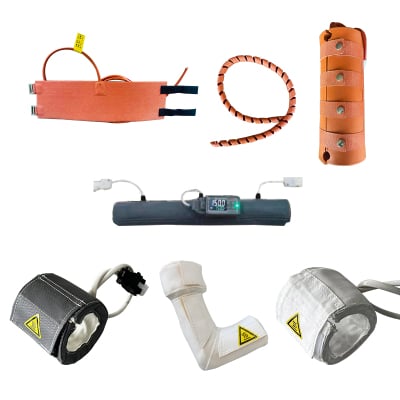
A pipe heater jacket or pipe heating jacket is often selected because it can be removed to access the line. In that case, assess the jacket and the permanent insulation as one thermal assembly. A pipe heating system can lose much of its benefit if removable sections leave exposed gaps, do not overlap adjacent insulation, or are reinstalled loosely after service.
Leave access for temperature sensors, control panels, valve handles, and safety devices. Insulation must not conceal a condition that operators need to inspect. For an electrically heated pipe heating system, confirm that the insulation and cover arrangement do not create a conflict with heater manufacturer instructions, electrical classification, grounding, or over-temperature protection.
Use a heating jacket where removability is genuinely valuable, such as a valve group, short process section, or line requiring cleaning. On long, stable runs, continuous correctly fitted insulation may offer fewer joints and more consistent thermal performance. The decision should follow maintenance frequency and process needs, not a preference for one construction.
A Practical Specification Checklist
- State normal, maximum, and minimum operating temperatures for the pipe heating system.
- Record pipe material, outside diameter, route, fittings, supports, and access constraints.
- Specify insulation material, temperature range, conductivity basis, thickness, density or mechanical requirements, and applicable standards.
- Define seam treatment, weather or vapor protection, and outer-jacket material for the actual environment.
- Detail treatment at supports, valves, flanges, sensors, and transitions to a pipe heater jacket.
- Require a heat-loss and surface-temperature calculation using stated assumptions, then verify installation quality in the field.
The Energy-Efficient Answer Is a Matched Assembly
An effective insulation choice for a pipe heating system fits the thermal duty and stays intact in service. Mineral fiber, foam, removable covers, and different jacket materials can all be appropriate in the right conditions. What matters is the fit between material limits, calculated thickness, moisture control, access, and workmanship.
Rather than asking for a universal thickness, build the specification around the line’s temperatures, ambient exposure, geometry, and maintenance plan. That approach gives a pipe heating system a better chance of holding process temperature efficiently while avoiding premature damage, unnecessary heat loss, and difficult-to-service details.

 Hot News