What Temperature Range Does a Semiconductor Chiller Need for Testing?
A semiconductor chiller does not have one correct temperature range for every test. The right range follows the device qualification plan, the desired junction or fixture temperature, the heat released by the equipment, and the thermal path between the coolant and the device. From a semiconductor equipment integration perspective, the useful question is not “How wide is the semiconductor chiller range?” but “What coolant conditions let this fixture reach, hold, and transition between the required test temperatures?”
For many test programs, a practical planning window starts around -40°C to +125°C. That window can support a broad set of environmental and functional checks, but it is not a universal specification. Qualification cycling may call for endpoints such as -55°C to +85°C, -55°C to +125°C, or -65°C to +150°C. A semiconductor chiller for those programs needs margin beyond the nominal setpoints after the heat exchanger, hoses, fixture losses, and control tolerance are considered.
Start with the test temperature, not the chiller nameplate
The first distinction is easy to miss: the device temperature, the fixture temperature, and the supply temperature from a semiconductor chiller are different measurements. A coolant loop may need to supply colder liquid than the desired fixture surface because heat enters through the test head, cables, ambient air, and the device itself. The reverse can apply during hot testing. So a request for “-40°C testing” does not automatically mean a semiconductor chiller with a -40°C minimum supply is sufficient.
Build the requirement from the test method in this order:
- List the required low, high, and nominal device or fixture temperatures.
- Define the permitted stability band and measurement location.
- Estimate steady and transient heat load from the DUT, electronics, probes, and ambient leakage.
- Identify the coolant, line length, heat exchanger construction, and allowable pressure drop.
- Confirm the needed ramp profile, dwell time, alarms, and control interface.
This approach prevents a common mistake: selecting a semiconductor chiller solely by its catalog temperature span while leaving the system heat balance undefined.
Representative temperature bands for semiconductor testing
The ranges below are planning examples, not replacements for a current customer specification or test standard. The applicable program may use different endpoints, tolerances, dwell times, and transfer conditions.
| Test objective | Representative temperature band | What the semiconductor chiller must support |
|---|---|---|
| Functional screening or controlled bench testing | Often near ambient, sometimes extending to roughly -40°C to +85°C | Stable setpoint control, enough capacity for active electronics, and repeatable fixture temperature. |
| Extended operating-temperature evaluation | Common planning examples include -40°C to +125°C or -55°C to +125°C | Low-temperature capacity after loop losses, heating capability at the upper end, and a suitable heat exchanger. |
| Qualification temperature cycling | Examples in JEDEC temperature-cycling conditions include -55°C to +85°C, -55°C to +125°C, and -65°C to +150°C | Range margin, controlled transitions, repeatable dwell performance, and instrumentation aligned with the method. |
| Specialized hot or cold characterization | Outside the bands above when the procedure requires it | A semiconductor chiller selected from a complete load and interface review rather than a generalized range claim. |
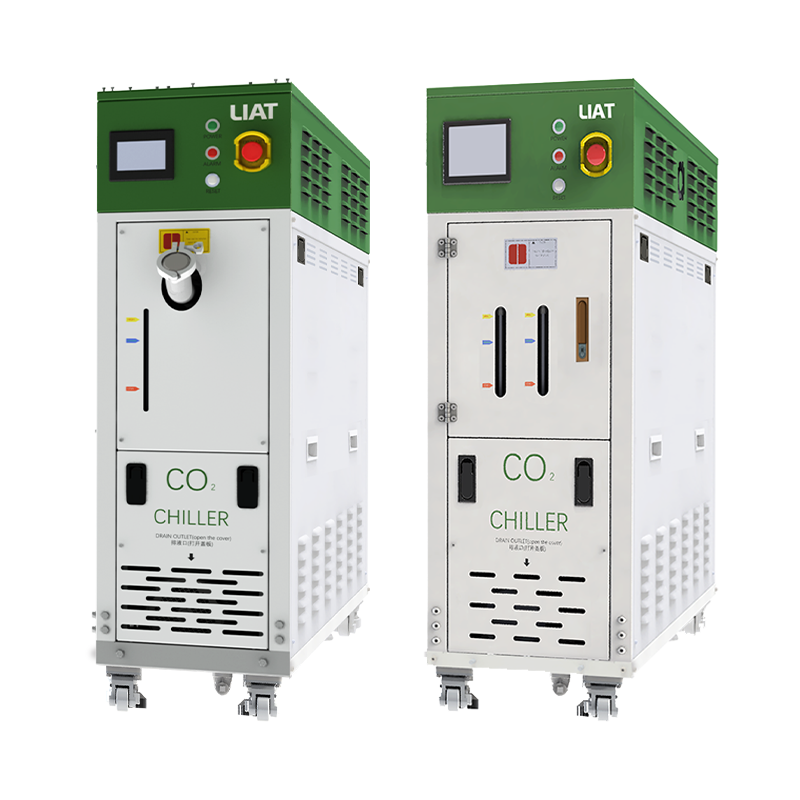
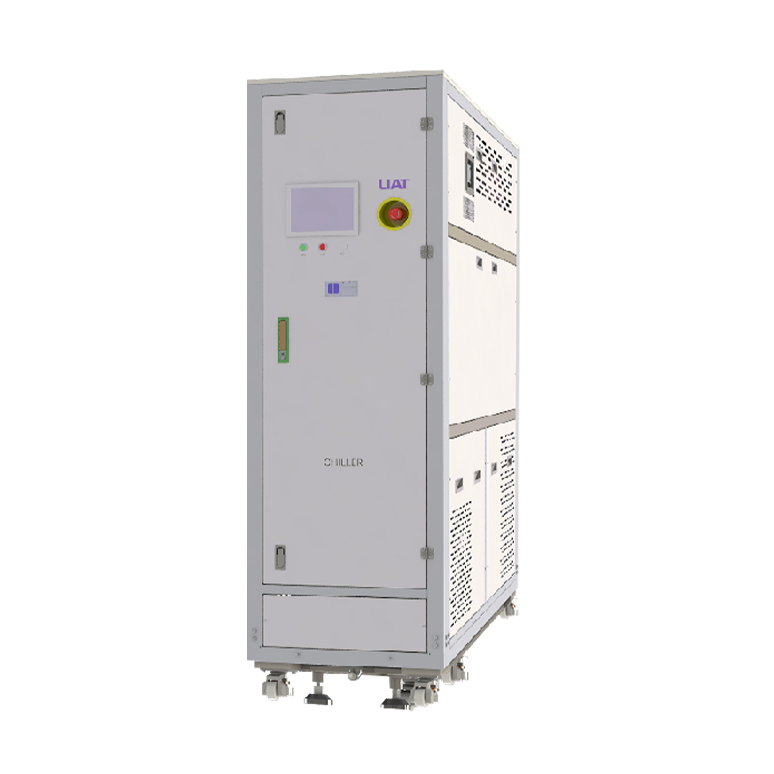
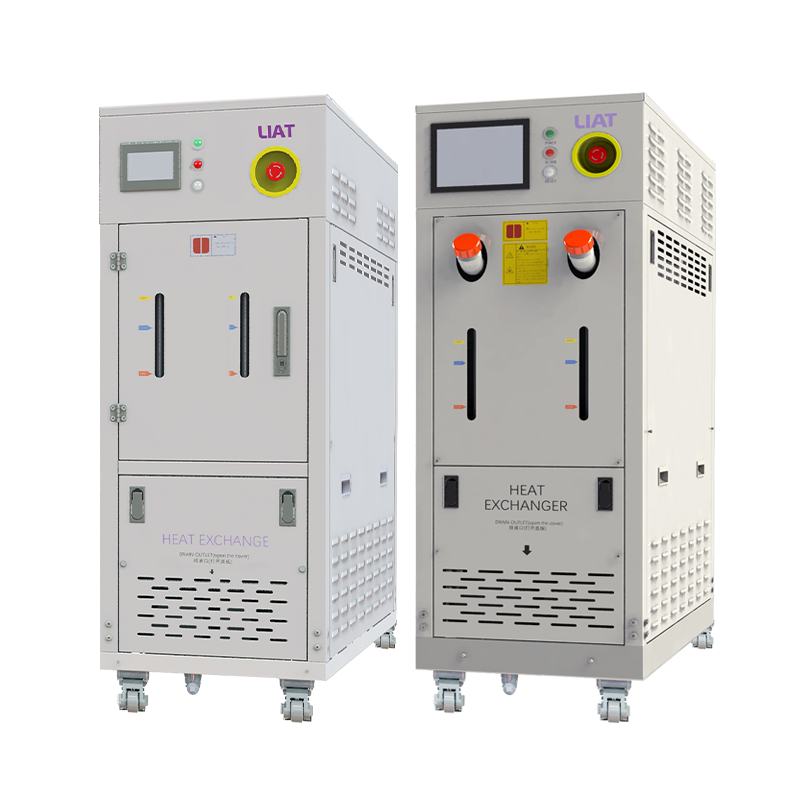
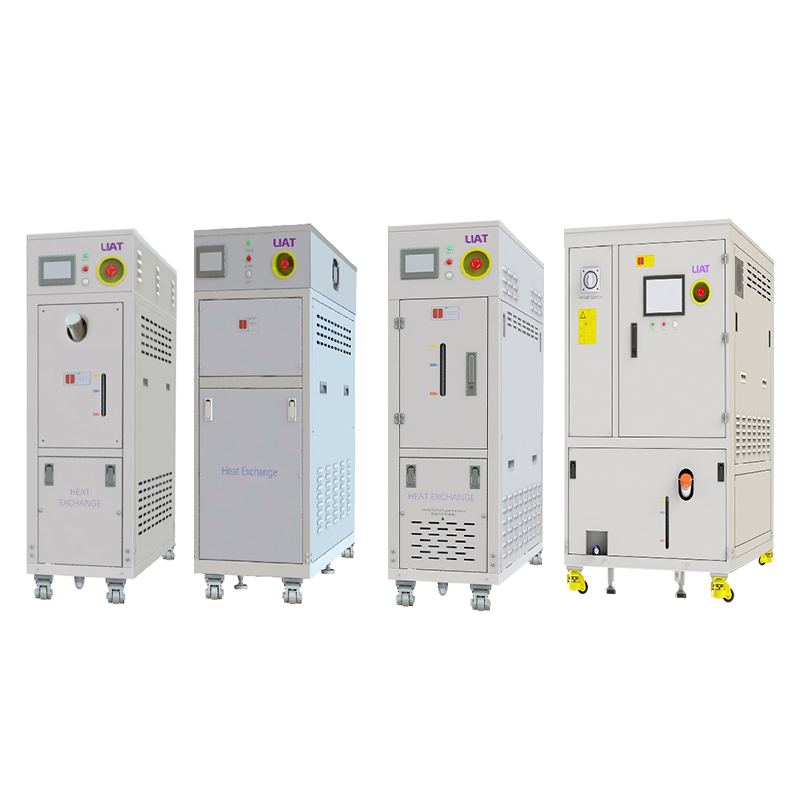
A recirculating chiller can be a strong fit for liquid-cooled fixtures because it can remove heat continuously while holding a controllable supply temperature. However, whether a recirculating chiller can meet a particular device ramp is determined by the fixture thermal mass and thermal resistance, not by the setpoint display alone.
How much temperature margin should you allow?
Specify the usable range at the point where the test actually happens. The semiconductor chiller should have enough operating margin to overcome heat gain or loss between its outlet and the controlled fixture. Long insulated hoses, restrictive quick couplings, a small liquid volume, and a poorly matched heat exchanger can all widen the difference between supply temperature and the temperature reported at the device.
For example, if the test head must remain at -40°C while dissipating heat, a semiconductor chiller may need to circulate fluid below -40°C. How much lower depends on the thermal resistance of the cold plate and the actual watt load. Likewise, a high-temperature test needs enough heating headroom to offset losses to the room and to control overshoot after a load change. Exact margin should come from measured or modeled fixture performance, not from a generic percentage.
Match range with load, stability, and ramp behavior
Temperature range is only one part of the specification. A semiconductor chiller that reaches the endpoints but cannot reject the load may drift during dwell. One that has ample capacity but a mismatched control loop may overshoot a sensitive fixture. Ask suppliers to evaluate capacity across the intended range, especially near the cold and hot limits, rather than at one favorable rating point.
Ramp requirements deserve the same care. Temperature cycling and thermal shock are different test approaches. Public technical material often describes cycling as using controlled transitions rather than simply the fastest possible change. A chiller system should therefore be assessed with the actual fixture attached: coolant flow, thermal mass, heat exchanger area, and control tuning all affect the measured ramp. If fast transitions are required, document whether the target is coolant temperature, fixture temperature, or device temperature.
Choose the fluid path before finalizing the equipment
A semiconductor chiller works as part of a loop. Confirm whether the coolant is water-based, a low-temperature mixture, dielectric fluid, or another approved medium. The choice affects viscosity, materials compatibility, pump behavior, freeze protection, and the achievable temperature range. It also changes how the heat exchanger should be sized and sealed.
At this stage, include the fixture plate, hoses, valves, connectors, filters, and sensors in the review. A chiller system with correct refrigeration capacity can still underperform if the loop has excessive pressure drop or trapped air. Conversely, improving the thermal interface may reduce the range and capacity burden on the semiconductor chiller.
A practical selection checklist
- Required low and high test temperatures, including allowable tolerance.
- Required dwell stability at the fixture or device measurement point.
- Steady-state and transient heat load across the full temperature range.
- Cooling and heating capacity of the semiconductor chiller at relevant endpoints.
- Coolant type, flow rate, pressure, cleanliness, and material compatibility.
- Heat exchanger geometry and the expected supply-to-fixture temperature difference.
- Ramp and recovery targets verified with the installed fixture.
- Controls, alarms, data logging, and equipment interface requirements.
Answer: select the range around the test plan
For a general starting point, many semiconductor test teams evaluate a semiconductor chiller capable of supporting a working window around -40°C to +125°C, then extend the range when the qualification plan, fixture losses, or specialized characterization demands it. Examples such as -55°C to +125°C and -65°C to +150°C illustrate why a single “standard” range is not enough.
The most appropriate semiconductor chiller selection is the one that holds the required temperature at the measurement point under real load. Before committing to a recirculating chiller or a larger chiller system, provide the target range, heat-load profile, coolant, heat exchanger details, control requirements, and test sequence for review. That turns a broad temperature-range question into a verifiable thermal-control specification.
 Hot News