
Why High Temperature Gas Line Heating Is Essential for CVD and Etch
In CVD and etch equipment, the gas path is part of the process, not merely a connection between a source and a chamber. A precursor can leave a source in a usable vapor state yet encounter a colder valve body, fitting, or tube section before it reaches the point of use. That local temperature drop can change delivery behavior and make a stable recipe harder to maintain. For that reason, high temperature gas line heating deserves to be evaluated as a process-connections decision rather than as a standalone heating accessory.
From a semiconductor equipment integration perspective, the useful starting point is not a generic heater rating. It is the relationship among precursor chemistry, vapor-pressure margin, source condition, line routing, gas-panel hardware, chamber connections, and the planned control zones. The target temperature alone does not define the requirement. A workable design also needs a clear view of thermal losses, flow conditions, insulation, sensor placement, and the consequences of a cold spot.
What Heated Gas Lines Do in CVD and Etch Systems
Many CVD processes rely on a vaporized precursor or another temperature-sensitive process gas arriving in the intended state. If part of the path falls below the chemistry-dependent transport condition, material can condense or adsorb on internal surfaces. Possible signs include a change in effective dose, delayed stabilization after a source change, particle or residue concerns, and more uncertainty during troubleshooting. In etch systems, heated delivery may similarly be required for selected reactants or by-products, although the relevant temperature boundary and materials of construction must be assessed for the actual chemistry.
High temperature gas line heating is used to keep the wetted path within a defined thermal envelope from the source outlet through the gas panel and toward the chamber. This is not the same as making every component as hot as possible. Too little heat can leave vulnerable cold points; excessive heat can create different compatibility, decomposition, seal-life, or safety questions. The correct setpoint is chemistry-specific and should be confirmed against qualified process information and component limits.
Published thin-film research illustrates why a zoned approach matters. One plasma-enhanced CVD study maintained precursor delivery lines at 100 °C and the plasma head at 125 °C to reduce the risk of precursor condensation. An ALD zirconium oxide study maintained delivery pipelines and a valve manifold at 90 °C for the same reason, while using a 150 °C exhaust line. These are examples of process-specific choices, not universal setpoints for CVD or etch equipment.
Why a Single Setpoint Rarely Solves the Problem
A single cable setpoint can look sufficient on a drawing, yet it does not describe the temperature of every part of the route. In practice, high temperature gas line heating is a thermal-system problem. A line can lose heat at exposed bends, clamps, tees, mass-flow-controller connections, valve manifolds, and transitions into a chamber or cabinet wall. A sensor located on a heater jacket may not represent the temperature of the gas-contact surface at a nearby metal fitting.
That is why a route is often divided into zones: source outlet, flexible or rigid transfer line, valve/manifold region, gas-panel transition, and chamber-side connections. Each zone may have different heat loss, thermal mass, material limits, or service-access needs. The design review should identify where the lowest local wall temperature could occur under normal operation and during startup, not simply where the highest displayed controller value appears.
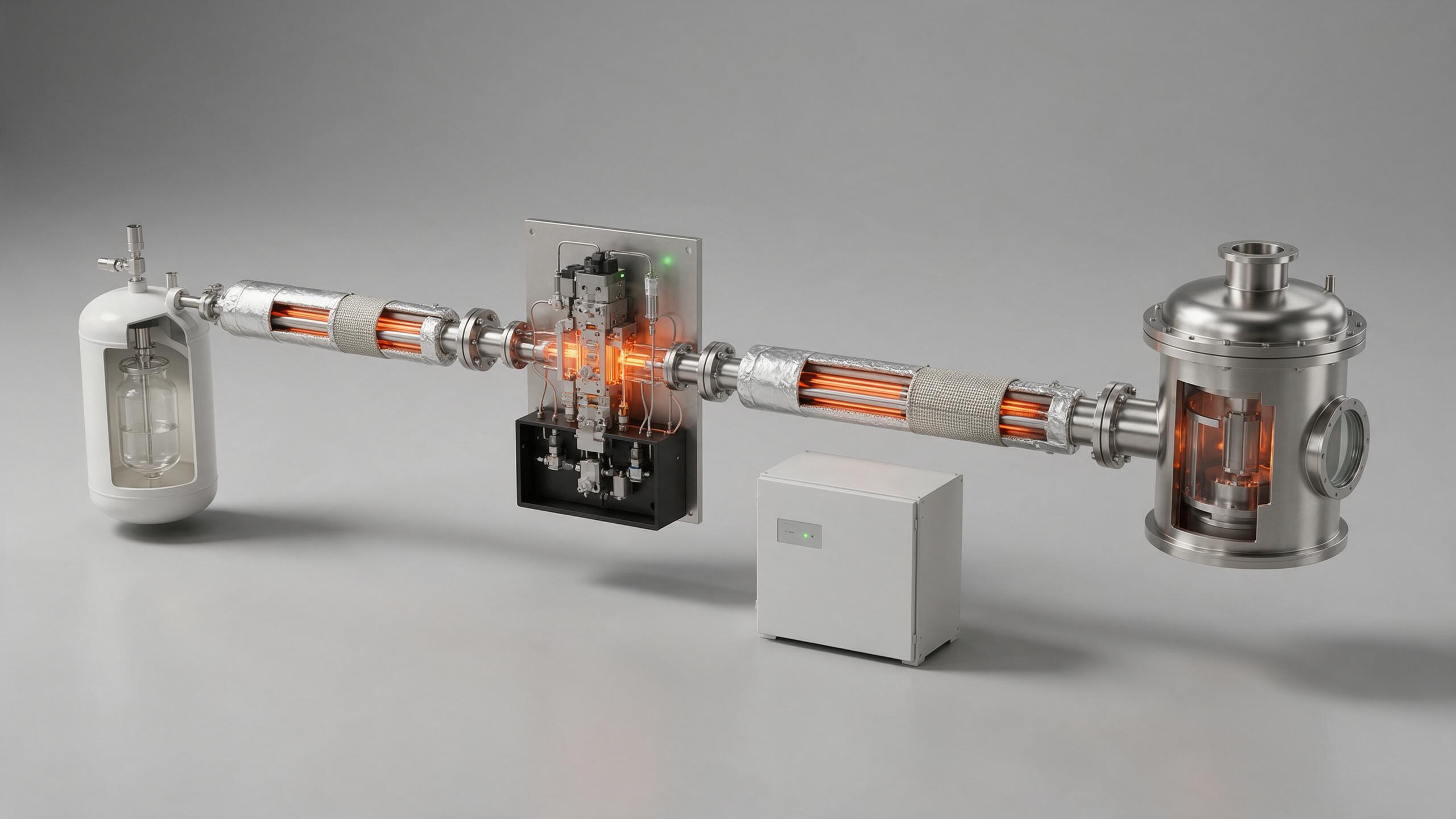
Process Consequences of Cold Spots
A cold spot may not create an immediate alarm. It can instead appear as recipe drift, repeatability issues after maintenance, a longer stabilization interval, or a discrepancy between commanded and observed process behavior. In that situation, changing source settings before checking the delivery route can send troubleshooting in the wrong direction. The more useful sequence is to compare recent changes in source condition, room environment, panel access, line routing, insulation condition, and tool cycle timing.
High temperature gas line heating also supports more disciplined fault isolation. If the system has distinct zones with accessible temperature feedback, technicians can determine whether the issue is associated with a source, a manifold, a route segment, or a chamber-side connections. This does not prove a chemistry cause by itself, but it turns an otherwise broad thermal question into a set of checkable conditions.
Design Factors That Need to Be Reviewed Together
Before selecting hardware, document the process boundary rather than beginning with a catalog temperature. A practical review includes the following items:
- Process chemistry and source state: Identify which gases or precursor vapors require thermal control and what qualified temperature range applies.
- Full wetted route: Map tubing, fittings, valves, filters, regulators, mass-flow devices, and chamber entry points. Do not assume that a heated tube alone covers attached metal hardware.
- Materials and seals: Check tubing alloy, valve seats, elastomers, insulation, cable construction, and connector ratings at the intended service temperature.
- Temperature zones and sensors: Define setpoints, sensor locations, alarm logic, and the difference between jacket, component-body, and gas-contact temperatures.
- Installation environment: Account for cabinet airflow, nearby cool surfaces, access panels, maintenance clearances, and sections exposed to ambient air.
- Controls and interlocks: Confirm how heater status, over-temperature protection, sensor faults, and tool permissives are handled by the gas panel and host system.
These factors explain why high temperature gas line heating should be reviewed with mechanical, electrical, controls, process, and EHS stakeholders. A heating circuit that is electrically functional may still need process review if it creates an unheated metal island or if its interlock behavior is unclear during a fault.
Integration with Cooling and Facility Utilities
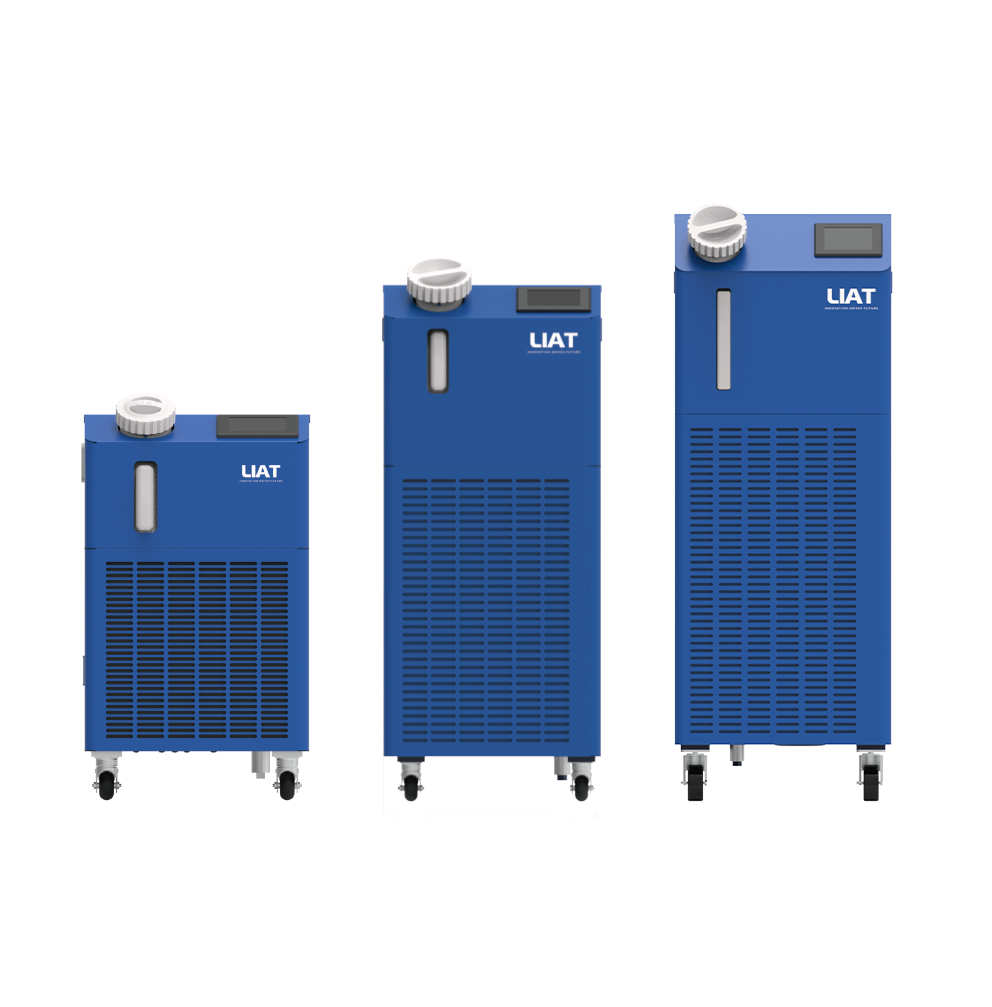
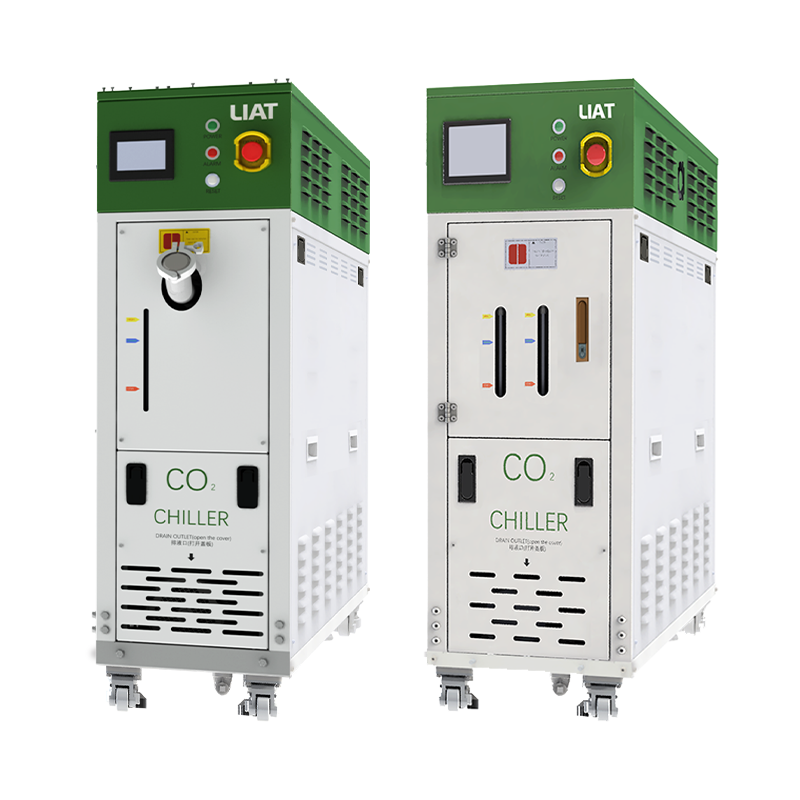
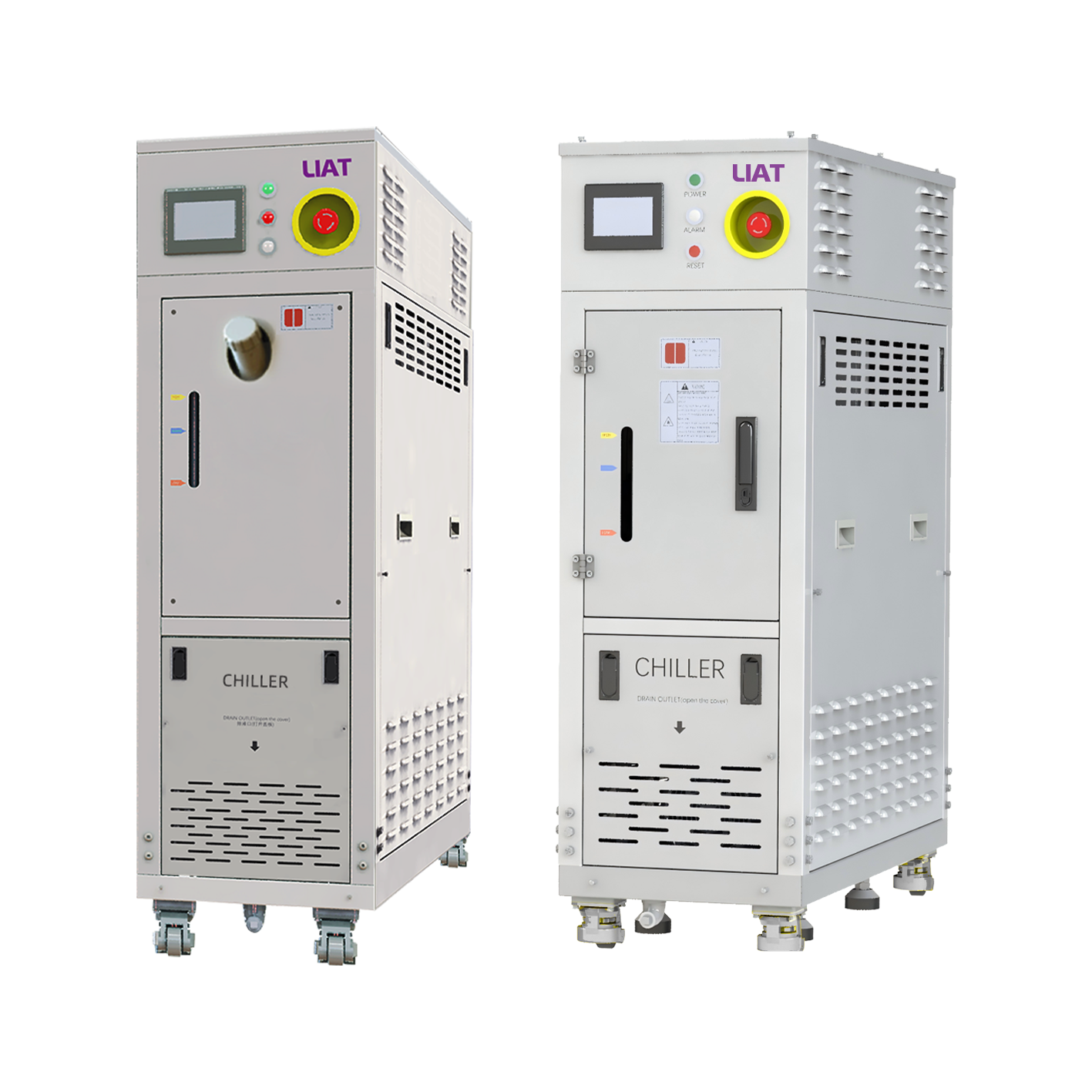
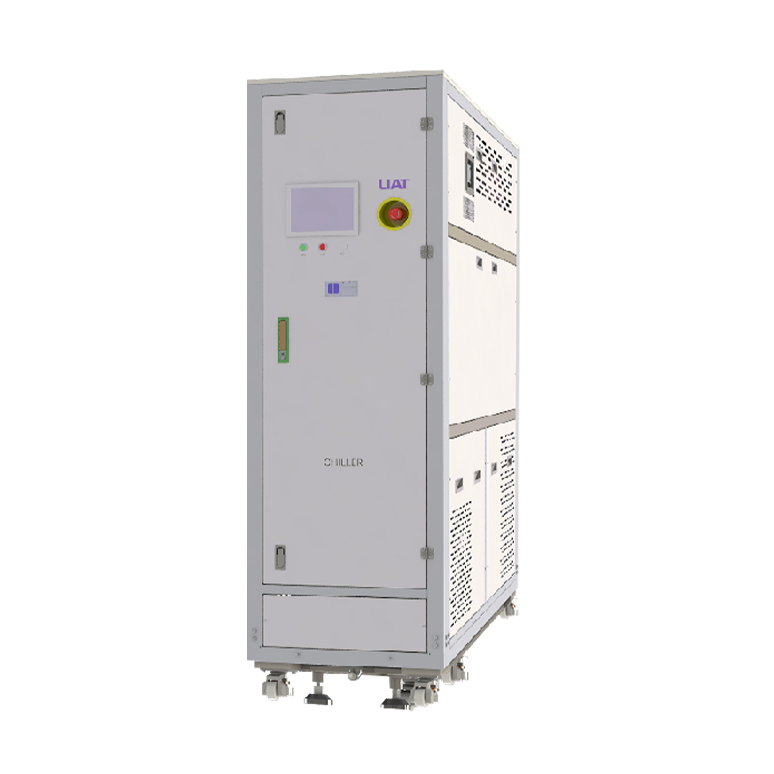
The auxiliary topic industrial water chiller is relevant, but its role must be defined carefully. Heated gas delivery and chilled utilities often exist in the same tool because chambers, RF hardware, pumps, or thermal-control equipment may require heat removal while a precursor path needs controlled heating. They serve different thermal duties. Connecting them in the same discussion is useful only when the connections is explicit: condensation on an adjacent surface, cabinet heat load, routing clearance, or a controls dependency.
For example, an industrial water chiller may influence ambient conditions in a utility bay, whereas the gas line heater must maintain its assigned zone despite those surroundings. The design question is not whether one utility replaces the other. It is whether the combined layout creates thermal gradients that affect process-gas delivery, service access, or sensor interpretation.
Commissioning High Temperature Gas Line Heating
Commissioning should demonstrate more than controller operation. It should show that the intended thermal envelope is present under representative conditions. Begin with a documented zone map and verify heater circuits, sensor identity, alarm response, grounding, cable routing, and insulation coverage. Next, allow the system to stabilize and inspect the locations most likely to lose heat: fittings, valve blocks, branches, supports, and transitions. Where the process risk warrants it, use an approved measurement method to compare accessible component temperatures with the design assumptions.
During process qualification, correlate delivery-path status with source operation and recipe behavior. If a change is observed after startup or maintenance, retain time-stamped records of zone values, ambient conditions, and process events. High temperature gas line heating is more useful when it is treated as an observable, controlled part of the process rather than a hidden utility.
A Better Specification Conversation
When discussing high temperature gas line heating with an integrator or supplier, provide the chemistry class, source temperature, required delivery route, target temperature range, maximum component temperature, tubing and fitting details, routing length, cabinet environment, control connections, and required alarm behavior. This turns a vague request for a heated line into a reviewable engineering input.
For many CVD and etch applications, high temperature gas line heating matters because it helps maintain the intended delivery condition from source to chamber. Its value comes from consistent zoning, compatible materials, meaningful feedback, and verification at the actual cold-risk locations. Treat the line, gas panel, controls, and surrounding utilities as one system, then validate the boundaries that matter for the specific chemistry.
 Hot News