
How a Heated Gas Delivery Line Keeps Specialty Gases Flowing
A specialty-gas system can look stable at the source and still deliver an unstable process stream at the tool. The reason is often simple: a vapor that is acceptable in one part of the system encounters a cooler surface, a pressure change, or a restrictive component farther downstream. A heated gas delivery line addresses that risk by maintaining a controlled thermal path from source to point of use. It is not merely a warm tube. It is a coordinated assembly of tubing, insulation, sensing, controls, fittings, and operating checks.
From an industrial purchaser’s perspective, the useful question is not “What temperature should the line be?” It is “Which temperatures, materials, flow conditions, and interfaces have been confirmed for this chemistry and this process?” That distinction matters because a nominal heater rating cannot replace application validation.
Why Specialty-Gas Flow Can Change Along the Route
Many specialty gases and vaporized precursors are sensitive to the balance among temperature, pressure, and composition. For a liquid or solid precursor, increasing source temperature may raise vapor pressure enough to support delivery through the pressure drop of downstream components. That is a general principle, not a universal operating recipe. The appropriate condition depends on the material data, the source vessel, the mass-flow device, line volume, process pressure, and the supplier’s handling guidance.
Once vapor leaves the source, every lower-temperature location deserves attention. A valve body, regulator, tee, filter housing, uninsulated fitting, or section near a draft can become a local cold point. If the process material reaches a condition where part of the vapor returns to a liquid or solid phase, the delivered composition and flow response may shift. A heated gas delivery line is intended to reduce those thermal discontinuities so the gas path behaves more consistently.
This is why a single temperature reading on a heater controller does not describe the whole route. The setpoint, sensor location, actual line-surface temperature, and temperature at critical transitions can differ. More accurately, stable delivery depends on the verified thermal profile of the complete path, not the controller display alone.
What a Heated Gas Delivery Line Actually Does
A well-considered heated gas delivery line supplies controlled heat to compensate for heat loss from the process path. Insulation slows that loss, while sensors and control logic help keep the line close to its qualified operating band. The intended outcome is a continuous vapor path between the conditioned source and the downstream process connection.
In practice, the assembly must be reviewed as a system:
- Tube and wetted materials: They must be compatible with the gas or precursor and the intended operating temperature.
- Trace heating and insulation: They should cover the relevant length and accommodate bends, supports, and service access without creating overlooked cold sections.
- Valves, regulators, and filters: These are often thermally different from straight tubing and should be assessed individually.
- Sensing and controls: The sensor location should represent the condition that needs control, with alarms and interlocks selected through the project’s safety review.
- Installation interfaces: Power, grounding, cable routing, enclosure conditions, maintenance access, and the point-of-use connection all affect field performance.
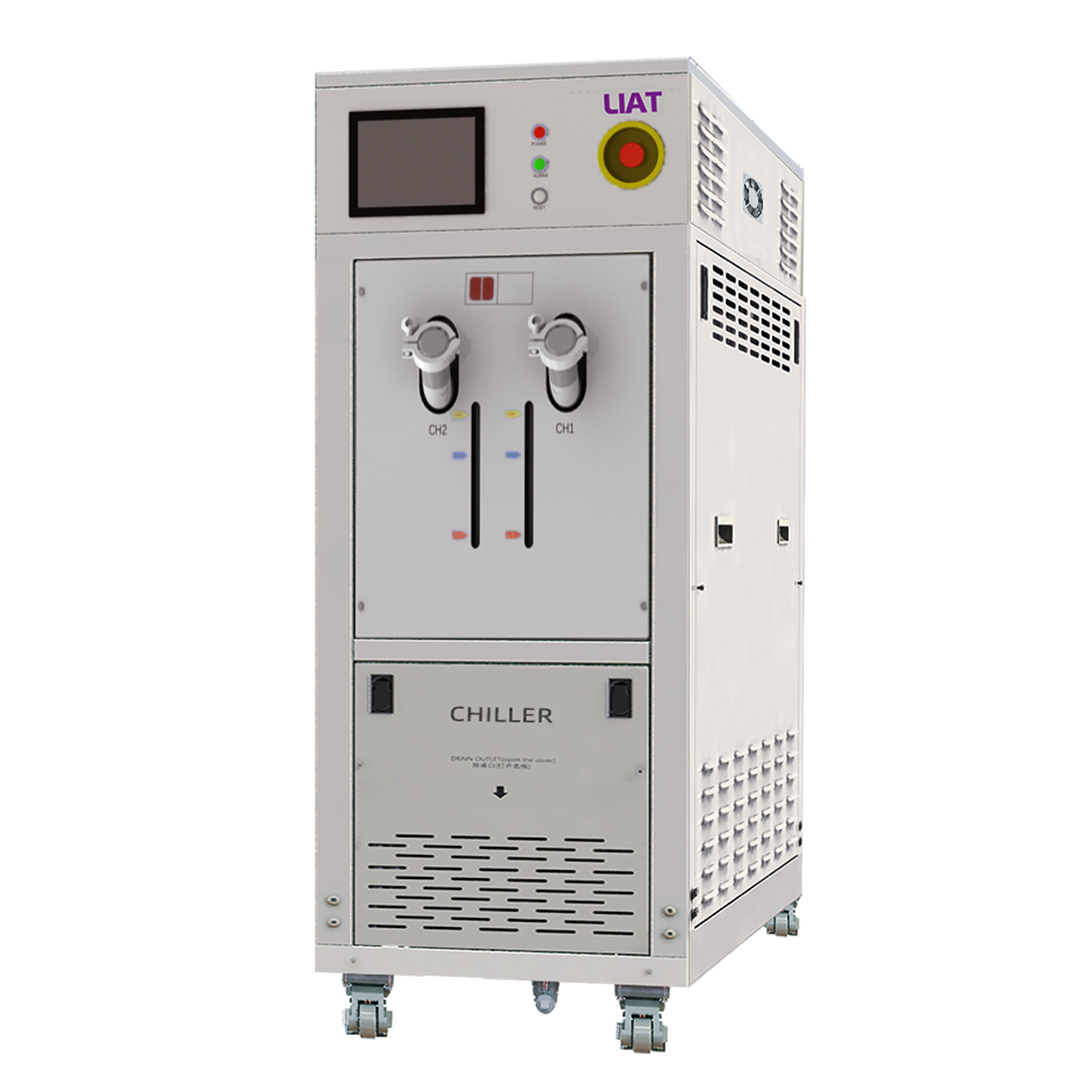
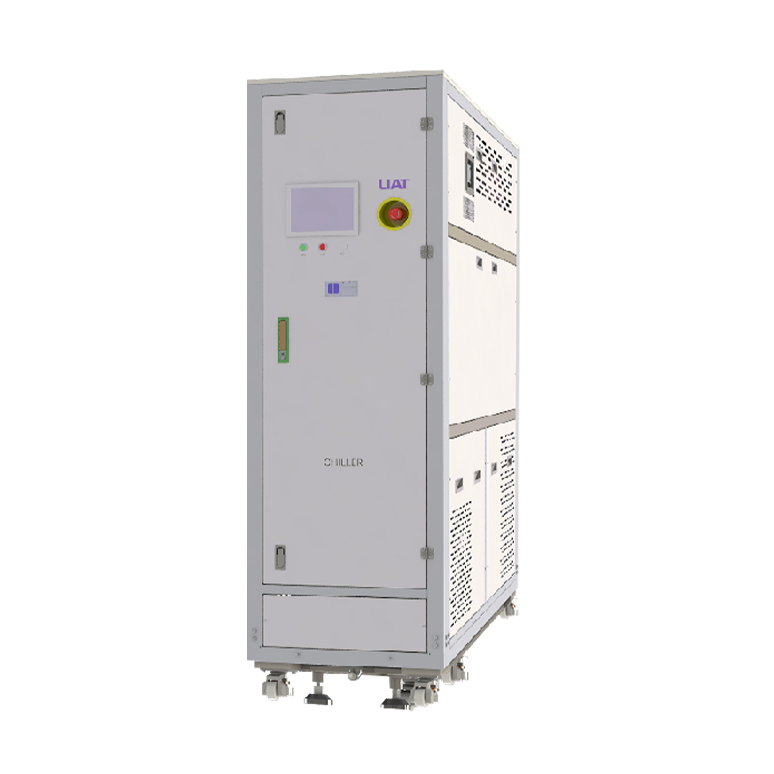
For teams that also specify an industrial water chiller for another part of the process, it is useful to keep the roles distinct. A chiller removes heat from a separate cooling loop; a heated delivery path maintains an approved temperature for a gas route. They may appear in the same thermal-management plan, but one should not be assumed to control the other’s process condition.
Commissioning: Verify the Whole Path, Not Just the Heater
Commissioning is the point where a heated gas delivery line becomes a process-ready system rather than a collection of parts. Before introducing process material, the engineering team should compare the installed route with the approved drawing and handling requirements. That review normally includes line routing, insulation continuity, fitting locations, electrical terminations, sensor placement, and the identity of each controlled zone.
Then validate the temperature behavior under realistic operating states: warm-up, steady delivery, changes in ambient conditions, and planned shutdown. If only a target temperature is known but the expected heat loss, pressure drop, and flow range are unknown, what is the basis for judging the result? A sensible acceptance plan names the readings to collect, the allowed response window, the responsible reviewer, and the chemistry-specific limits supplied by qualified sources.
It is also worth recording the conditions used during commissioning. Load changes can be linked to process cadence or nearby equipment, so investigation should not focus on one heater circuit in isolation. A documented baseline makes later troubleshooting faster and helps distinguish a thermal issue from a source, restriction, or flow-control issue.
Operating Signals That Deserve a Check
No single symptom proves that a heated section is at fault. Still, several observations justify a structured review:
- Delivery behavior changes after ambient temperature, line configuration, or production cadence changes.
- A controller reaches its setpoint while a fitting, valve, or downstream transition has not been verified at the required condition.
- Warm-up time becomes less repeatable than the established baseline.
- Pressure or flow response changes without a confirmed adjustment to the source or process recipe.
- Maintenance work has altered insulation, sensor attachment, routing, or electrical connections.
Start with evidence rather than assumptions. Review logged temperatures, controller status, alarm history, actual sensor placement, and the current mechanical route. Next, compare the source condition, flow-control configuration, and downstream demand. Raising the setpoint without a chemistry-specific review can create a different problem, especially where material stability, seals, or equipment temperature limits are relevant.
Maintenance Priorities for a Stable Thermal Path
Maintenance is not limited to confirming that the heater powers on. Inspect insulation for gaps or compression, check the condition of flexible sections and supports, and confirm that sensors remain attached where the control plan expects them. Review terminal enclosures, protective devices, and cable routing according to the site’s electrical procedures. When a line is opened for service, treat reassembly and requalification as part of the maintenance task rather than an afterthought.
It is tempting to treat a catalog temperature rating as a site result. It is not. A rating needs to be understood alongside material compatibility, ambient conditions, line geometry, insulation, mounting, controller behavior, and the approved process envelope. Belonging to the same industry does not make two gas-delivery projects equivalent.
A Practical Specification Checklist
Before specifying or revising a heated gas delivery line, gather the information that connects thermal design to the actual process:
- Identify the gas or precursor, its approved handling requirements, and material-compatibility constraints.
- Map the full route, including source, tubing, fittings, valves, filters, flow-control devices, and point of use.
- Define the intended operating range, ambient exposure, start-up sequence, flow range, and pressure conditions.
- Specify how each critical zone will be heated, insulated, sensed, controlled, alarmed, and serviced.
- Agree on commissioning records and the conditions that trigger engineering review after installation changes.
This checklist does not replace the chemical supplier’s documentation, site safety analysis, or qualified engineering review. It does give procurement, facilities, and process teams a shared way to ask for evidence before selecting hardware.
Keep the Gas Path in View
A heated gas delivery line supports consistent specialty-gas flow by treating temperature as a property of the entire route rather than a single heater. When source conditions, tubing, fittings, controls, and downstream interfaces are evaluated together, the team has a clearer basis for commissioning and maintenance decisions. The practical objective is not the highest possible setpoint; it is a verified thermal path that suits the specific chemistry and operating conditions.

 Hot News