
How to Maintain a Pipe Heating System Across Semiconductor Tools
In a semiconductor facility, a pipe heating system is rarely just a utility accessory. Heated gas lines, exhaust runs, forelines, chemical-transfer pipes, and temperature-sensitive fluid connections can each have a different process role. From a field-maintenance perspective, the useful question is not simply whether a line feels warm. It is whether the pipe heating system is still operating within the approved tool conditions, communicating its actual condition clearly, and remaining mechanically intact as the tool moves through production and service cycles.
That distinction matters because precise heating can help maintain a required line temperature and reduce condensation risk in applicable gas-delivery or exhaust configurations. More accurately, that conclusion only applies after the medium, process duty, approved temperature limits, and installed equipment documentation have been confirmed. A good maintenance routine therefore combines visual inspection, electrical checks, temperature verification, insulation review, and disciplined escalation rather than a one-size-fits-all adjustment.
Start by mapping every heated run to its tool function
Before inspecting hardware, create or update a line map for each pipe heating system. Identify the tool, line name, service, heater zone, controller or power source, sensor location, insulation configuration, and the document that defines the approved operating range. A maintenance walkdown is more effective when it distinguishes a process-gas line from a vacuum foreline, exhaust line, fluid pipe, or cabinet connection; they may look similar but can have different risks and acceptance criteria.
- Verify the tag or label at the line, controller, and disconnect matches the current drawing.
- Note removable sections, valves, flanges, bends, flex connections, and supports where a pipe heating jacket can be disturbed during service.
- Record the sensor type and its attachment point rather than assuming the controller display represents the pipe-wall temperature.
- Flag any line that has been rerouted, re-insulated, exposed to a leak, or serviced since the last documented inspection.
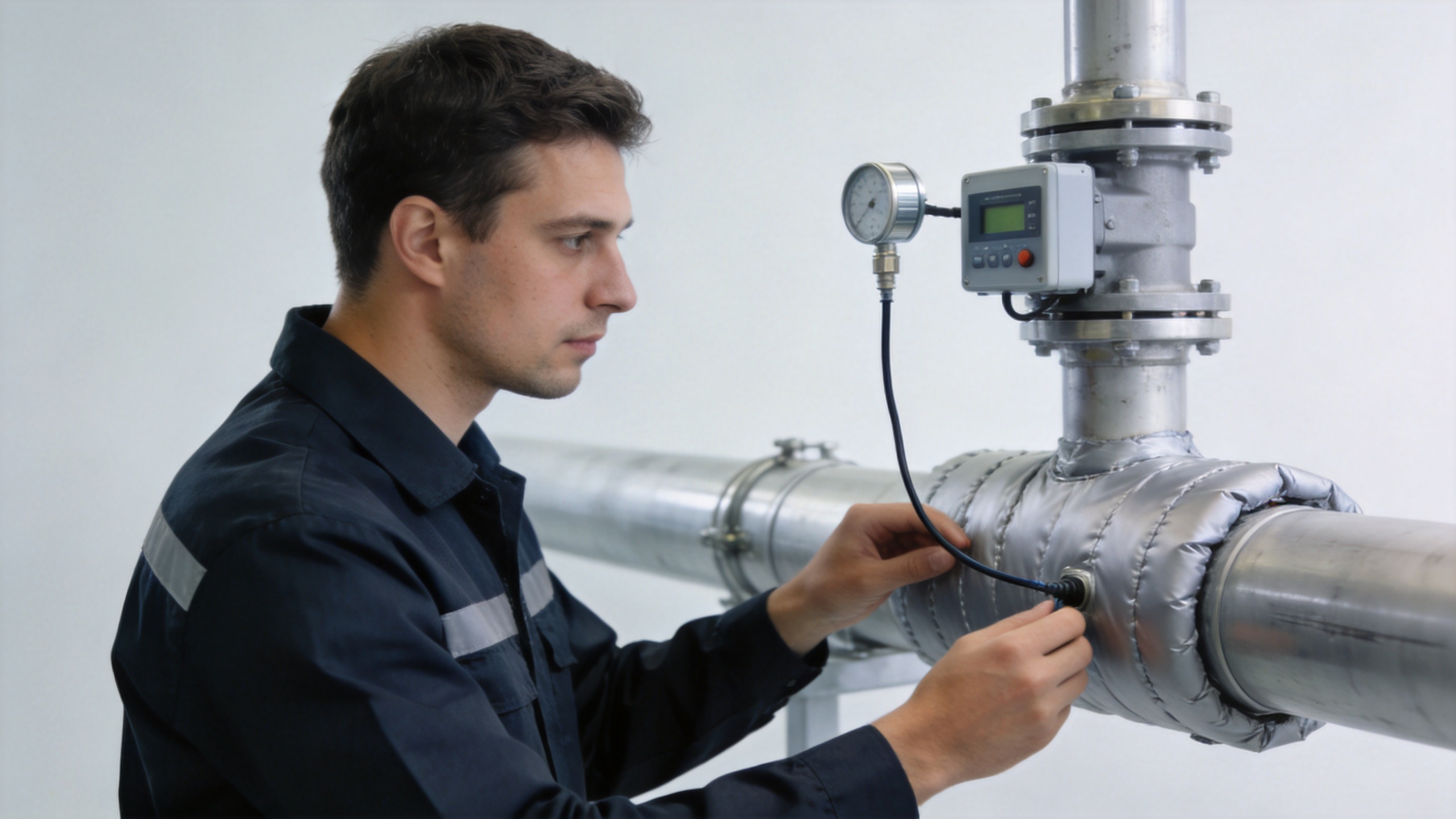
This system view prevents a common maintenance error: treating a single temperature reading as proof that the complete heated path is healthy. Temperature management usually extends from the heater to the pipe, insulation, control interface, and process conditions working together.
Use safe preparation before opening or handling a heating jacket
Work only under the site’s approved electrical-safety, lockout/tagout, chemical-safety, and tool-release procedures. De-energize and verify the relevant circuit when the task requires access to wiring or a removable heating jacket. Do not change setpoints, sensor parameters, alarm limits, or controller tuning simply to clear an alarm. Those changes should follow the tool owner’s documented approval path.
Confirm that the line has been released for maintenance and that the work scope accounts for residual heat, process residues, sharp metal edges, and restricted access. If the installation serves hazardous or regulated service, use the applicable equipment documentation and site requirements to determine what qualified personnel and checks are necessary. Standards such as UL 499 may be relevant to some electric heating equipment, but certification, installation suitability, and local requirements must be verified for the actual assembly—not inferred from a general standard name.
Inspect the pipe heating system in a repeatable sequence
1. Look for mechanical damage and moisture paths
With the system in a safe state, inspect heater coverage and retention at straight runs, elbows, tees, valve bodies, and transitions. Look for loose straps, compressed insulation, torn outer fabric, exposed conductors, brittle sections, abrasion at supports, or gaps where washdown, leaks, or ambient moisture could reach the heater. An industrial heating jacket that has shifted away from the intended contact area can create an uneven thermal path even when its controller remains powered.
Pay particular attention after tool moves, line modifications, or recurring access by other trades. A jacket around a complex-shaped pipe may need a documented refit rather than extra fastening force. Do not bridge gaps with unapproved tape, overlap heaters without design approval, or force a jacket over fittings that were not included in its intended geometry.
2. Check wiring, terminations, and grounding against documentation
Inspect accessible cables, strain relief, plugs, junction boxes, and grounding points for heat discoloration, looseness, contamination, or physical damage. Compare circuit identification and protective-device information with the approved drawing. Qualified personnel should perform insulation-resistance, continuity, grounding, or other electrical tests only when the equipment manufacturer and site procedure specify them. A passing visual check is not a substitute for the required electrical verification, and an electrical reading should not be interpreted outside its documented acceptance limits.
3. Verify temperature control as a measurement chain
For an operating pipe heating system, compare the controller indication, the designated sensor reading, and any approved independent verification method at the locations and stabilization times defined by the tool procedure. Do not use an improvised surface measurement as a new acceptance standard; surface emissivity, insulation coverage, sensor placement, and airflow can alter what a handheld instrument reports.
Instead, document the observed values, operating state, alarm history, and measurement method. If readings disagree, first investigate sensor attachment, cable integrity, heater-to-pipe contact, insulation condition, and the approved control configuration. This may relate to the process cycle, but the evidence still needs to come from the tool’s records before assigning root cause.
4. Examine insulation and interfaces, not just the heater
Insulation protects more than energy efficiency. In a semiconductor tool environment, it can influence heat loss, condensation exposure, touch-temperature controls, and the repeatability of local measurements. Check that insulation is dry, continuous, properly closed, and not pinched by clamps or access panels. At serviceable connections, confirm that removing and reinstalling insulation has not moved the pipe heating jacket, sensor, or cable routing.
Performance descriptions should include documented boundaries such as temperature range, medium, heat load, and interface conditions. A change in insulation thickness, an added support, or an altered purge condition can matter even if the heater itself has not been replaced.
Set a maintenance cadence that matches tool events
A calendar interval alone may be too blunt for every semiconductor tool. Combine the site’s preventive-maintenance interval with event-based checks after a leak, alarm, line break, tool relocation, heater replacement, insulation removal, controller work, or abnormal temperature trend. Maintain a simple record for each pipe heating system:
- Tool and line identification, service, zone, and document revision.
- Inspection date, technician, safe-work release, and observed physical condition.
- Approved test method, readings, operating state, and alarm-history review.
- Corrective action, parts used, drawing or configuration changes, and required follow-up.
This record supports handoffs across process, facilities, equipment, and EHS teams. It also helps avoid equating nominal heater output with a verified field result; named conditions and documented checks are more useful than a generic “working” status.
Know when to remove a line from routine observation
Escalate rather than normalize any damaged outer layer, exposed conductor, evidence of liquid ingress, repeated alarm, unexplained controller-versus-sensor mismatch, persistent hot or cold zone, changed cable routing, or process concern linked to temperature control. These are not automatically failures, but they deserve priority verification. Isolate the affected equipment when the approved procedure requires it, preserve the alarm and inspection evidence, and involve the tool owner or qualified heating-equipment specialist before returning the line to service.
For replacements or modifications, confirm the target temperature range, heat load, medium, pipe geometry, voltage, controls, sensor location, insulation arrangement, and installation interface. Considering these conditions together is more defensible than comparing an industrial heating jacket by price or wattage alone. It also keeps lifecycle costs—maintenance effort, fit-up time, troubleshooting exposure, and unplanned downtime risk—in view without promising a specific savings outcome.
A practical closeout checklist
- Line identification, drawing revision, and approved operating conditions were reviewed.
- The heating jacket, insulation, sensors, supports, cables, and terminations were inspected under the authorized work scope.
- Temperature and electrical checks followed the approved equipment and site methods.
- Any mismatch, alarm, damage, or process concern was documented and escalated rather than bypassed.
- Reassembled insulation, heater placement, cable routing, and labels were verified before release.
Maintaining a pipe heating system across semiconductor tools is ultimately a controlled verification task. When teams map the heated path, protect the installation during service, validate the measurement chain, and document deviations, they can make maintenance decisions with clearer boundaries and fewer assumptions.
 Hot News